
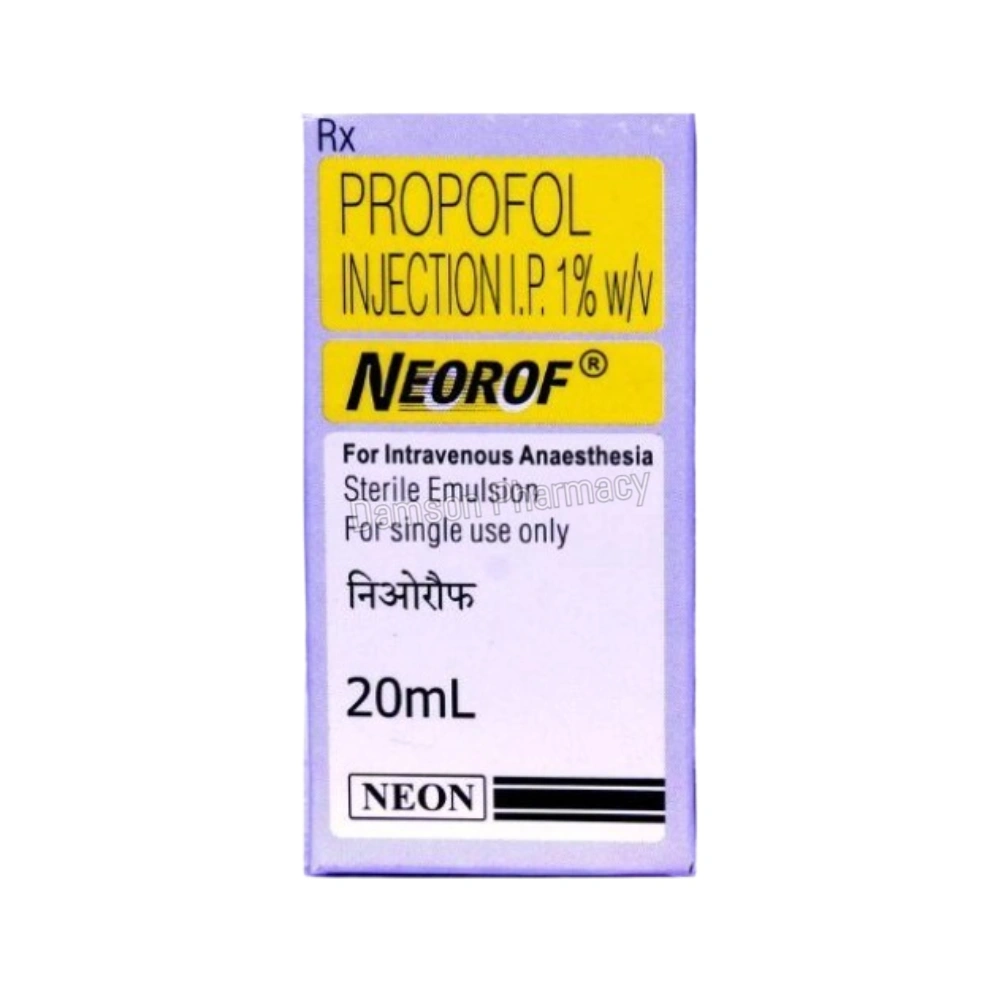
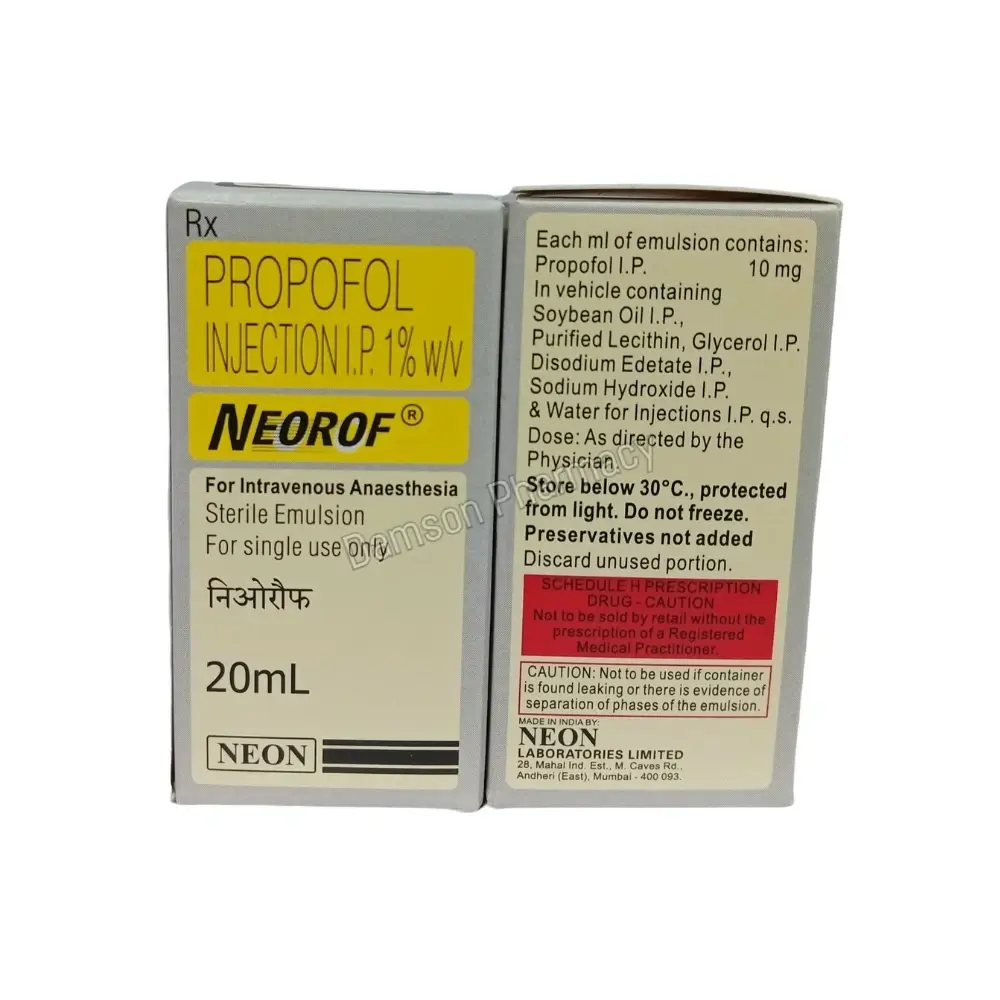
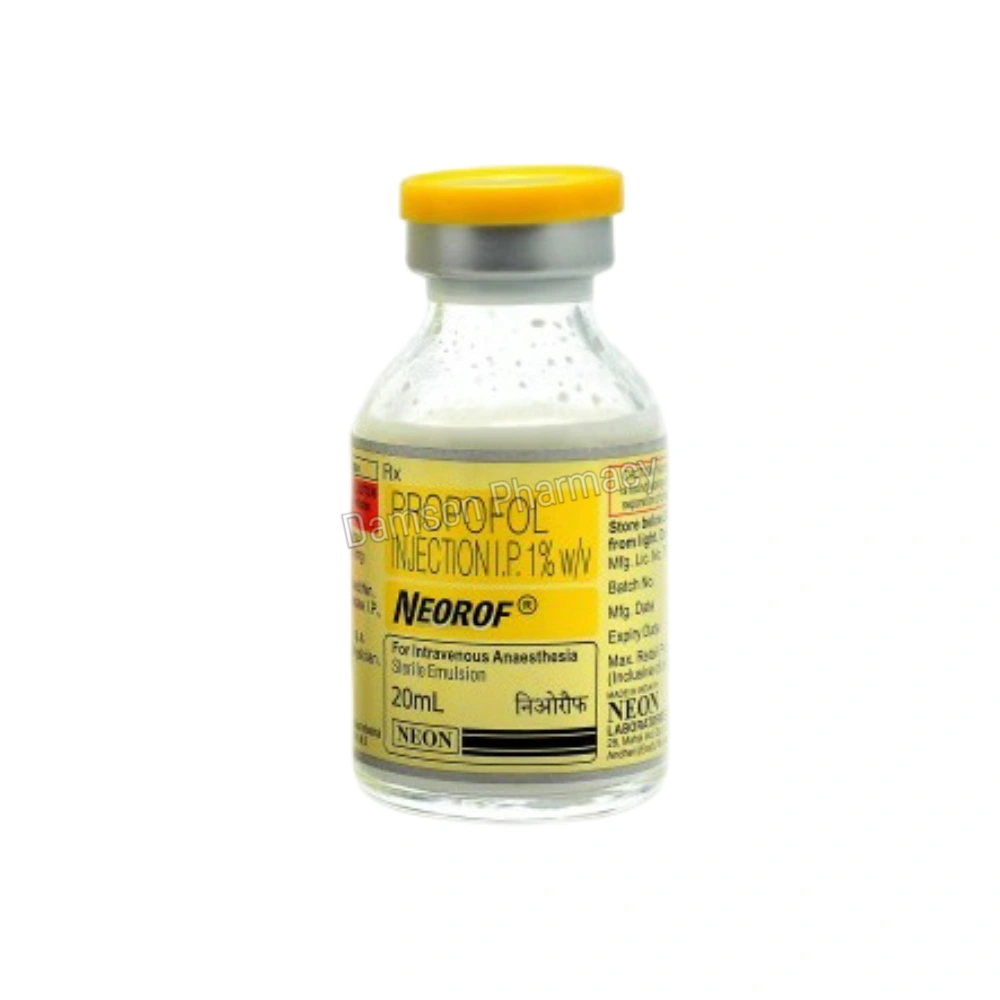
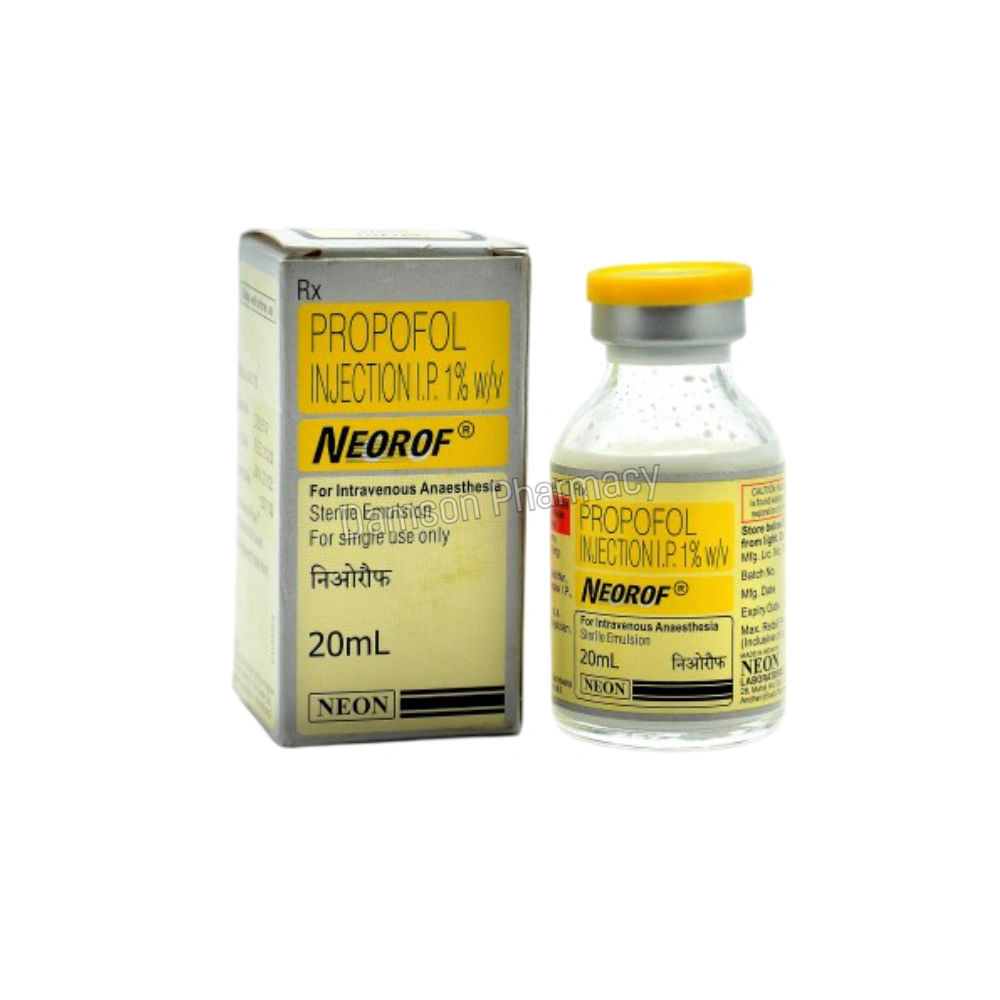
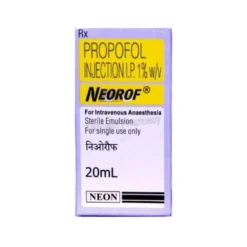
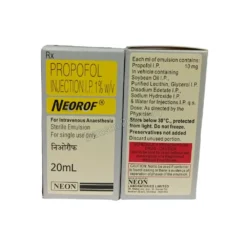
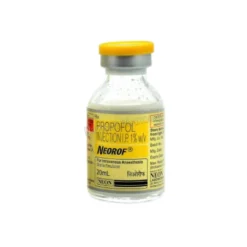
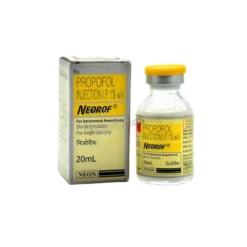
Neorof Propofol Injection 20ml
Price range: $20.00 through $120.00
Neorof Injection is used for induction and maintenance of anesthesia during medical procedures. It contains Propofol, which works by slowing brain activity to produce sedation and loss of consciousness.
| Pack Size | Price/Unit | Price | Quantity | |
|---|---|---|---|---|
| 10 Packs | $12.00/unit | $120.00 | ||
| 1 Pack | $20.00/unit | $20.00 | ||
| 5 Packs | $15.00/unit | $75.00 |
Looking for bulk / B2B pricing? |
Send Inquiry |
Availability : IN STOCK


Medically Reviewed by Damson Pharmacy Medical Review Board

Introduction to Neorof Injection 20ml
Neorof Injection 20ml is a prescription anesthetic solution primarily used in clinical and hospital settings. It assists healthcare professionals in inducing or maintaining anesthesia during surgeries and other medical procedures that require patient sedation.
Manufactured with strict pharmaceutical standards, Neorof Injection is typically administered by trained medical personnel. It comes in a 20ml vial and is intended for intravenous use under controlled conditions to ensure safety and efficacy.
The injection is known for its rapid onset and short duration of action, making it ideal for short surgical procedures. Its usage requires monitoring of vital signs to avoid complications during and after administration.
Uses of Neorof Injection 20 ml
- Induces general surgical anesthesia
- Maintains anesthesia during procedures
- Provides short-term sedation effectively
- Used in minor surgeries
- Facilitates painless medical procedures
- Helps during diagnostic interventions
- Supports ICU patient sedation
How Does Neorof Injection 20 ml Works?
Neorof Injection 20ml contains Propofol, a fast-acting anesthetic agent. It works by enhancing the activity of GABA, a neurotransmitter in the brain, which slows down brain activity and induces a state of sedation or unconsciousness.
This action leads to a rapid onset of anesthesia, making it useful for initiating and maintaining sedation during surgeries or other medical procedures. Its effects wear off quickly after stopping the infusion, allowing for controlled recovery and reduced post-anesthesia complications.
Side Effects of Neorof Injection 20 ml
- Drowsiness
- Decreased Blood Pressure
- Respiratory Depression
- Pain or Discomfort at Injection Site
- Nausea and Vomiting
- Headache
- Irritation or Burning Sensation at Injection Site
- Confusion or Disorientation
How to Manage Side Effects?
- Report any breathing difficulty or unusual reactions during or after administration.
- Continuous observation helps detect low blood pressure or heart rate changes early.
- Maintain fluid balance to reduce dizziness, low blood pressure, or fatigue.
- Move slowly after waking to prevent lightheadedness or risk of falling.
- Oxygen may be provided for breathing issues during or after sedation.
- Medical professionals should have resuscitation tools available for rare allergic reactions.
- Rest well and avoid operating machines until full alertness returns.
Warnings & Precautions
- Use only under supervision of trained healthcare professionals in a clinical setting.
- Not recommended for self-administration or non-hospital environments.
- Exercise caution in elderly, debilitated, or critically ill patients.
- Adjust dosage for individuals with liver, kidney, or cardiac disorders.
- Avoid use in patients with known hypersensitivity to Propofol or its components.
- Continuous monitoring of respiration and cardiovascular function is essential during administration.
- Not suitable for use in pediatric ICU sedation unless specifically indicated by a doctor.
- Discontinue use if unexplained metabolic issues or infusion syndrome is suspected.
FAQs – Frequently Asked Questions
Is It Safe To Use Neorof Injection 20ml With Other Medications?
How Is The Dosage Of Neorof Injection 20ml Determined For Each Patient?
Can Neorof Injection 20ml Be Used For Children Under Medical Supervision?
How Quickly Does Neorof Injection 20ml Start Working After Administration?
| Pack Size | 1 Pack, 10 Packs, 5 Packs |
|---|---|
| Price/Unit | $12/unit, $15/unit, $20/unit |
Reviews
There are no reviews yet