
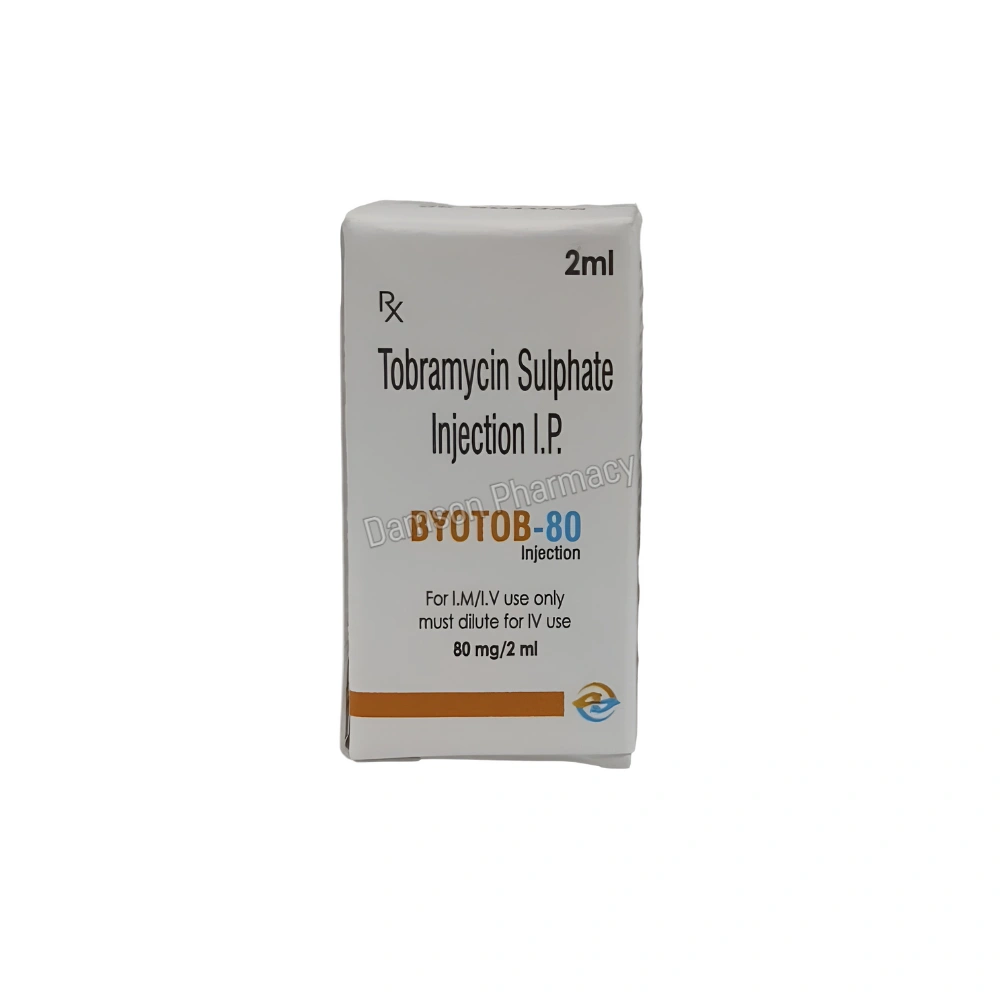
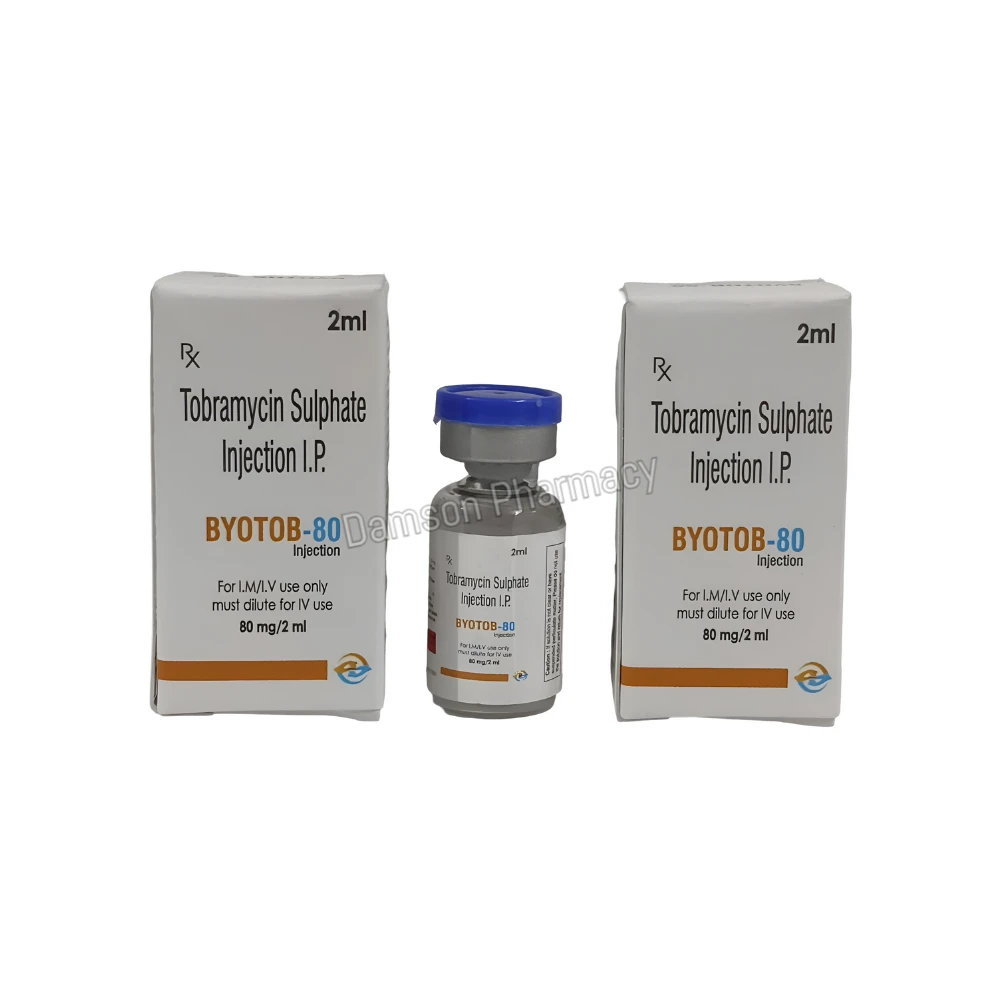
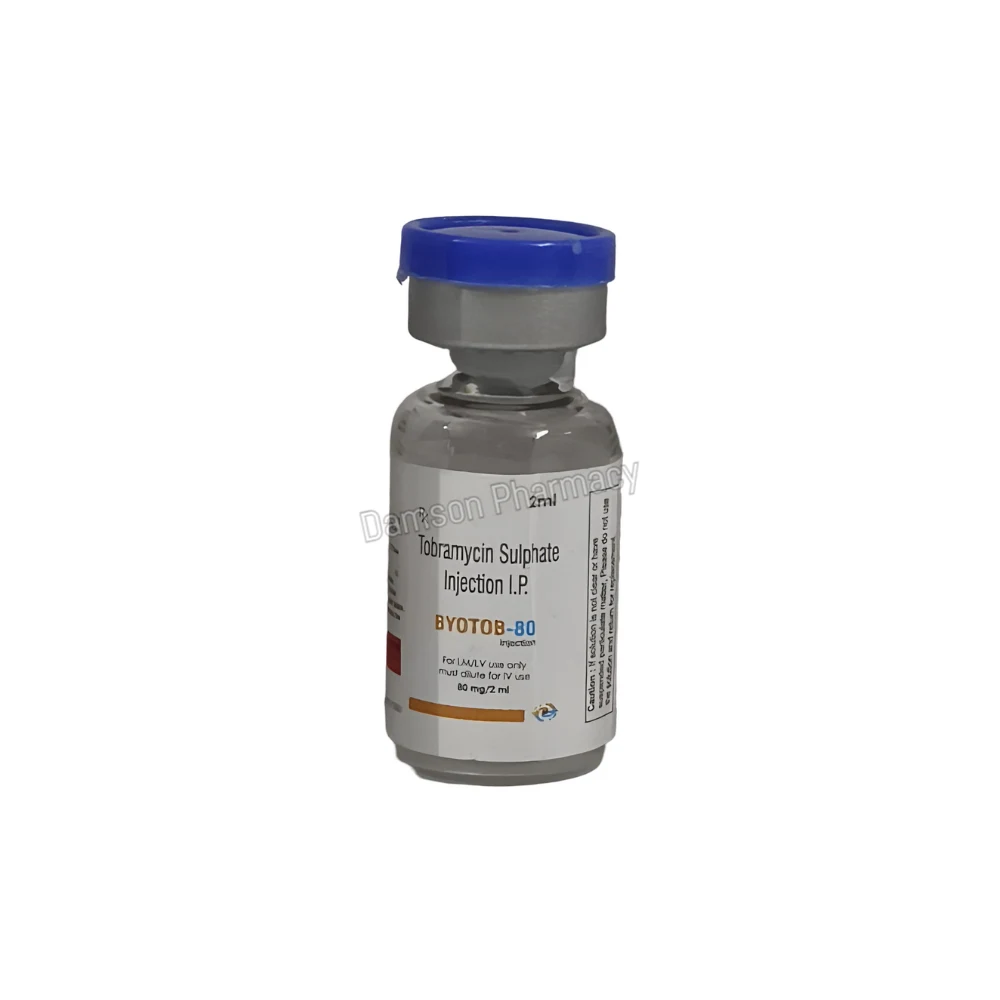
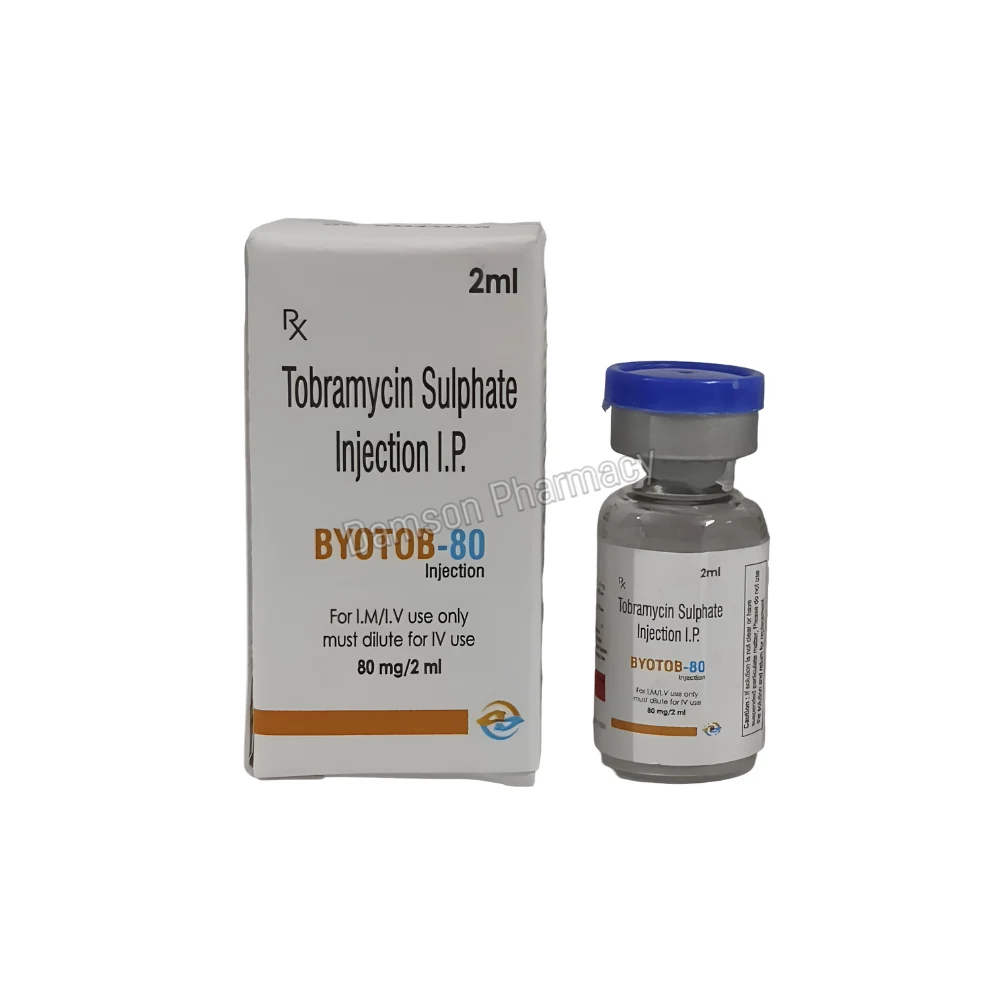
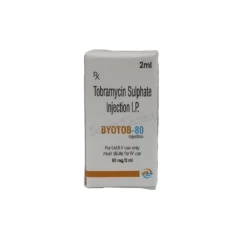
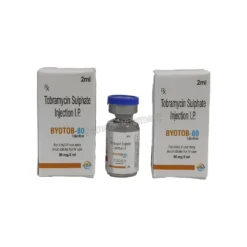
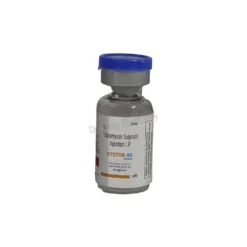
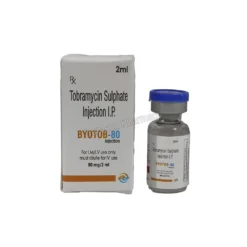
Byotob 80mg Injection Tobramycin Injection
Price range: $15.00 through $100.00
| Pack Size | Price | Price / Unit | Quantity | |
|---|---|---|---|---|
| 1 Injection | $15.00 | $15.00 / unit | ||
| 5 Injections | $60.00 | $12.00 / unit | ||
| 10 Injections | $100.00 | $10.00 / unit |
Looking for bulk / B2B pricing? |
Send Inquiry |
Availability : IN STOCK


Medically Reviewed by Damson Pharmacy Medical Review Board

Introduction to Tobramycin Injection
Tobramycin Injection is a powerful antibiotic medication used to treat serious bacterial infections, particularly those caused by gram-negative bacteria. It belongs to the aminoglycoside class and is commonly used in hospital settings under close medical supervision.
This injection is typically reserved for infections that have not responded to other antibiotics. It is especially effective against infections of the bloodstream, urinary tract, abdomen, lungs (such as hospital-acquired pneumonia), and skin.
Tobramycin Injection is administered intravenously or intramuscularly by a healthcare professional. Its dosing is based on body weight, kidney function, and the severity of the infection being treated. It is manufactured by Pace Biotech.
Uses of Tobramycin Injection
Tobramycin Injection is used for treating a variety of serious bacterial infections, especially those caused by gram-negative organisms. Key uses include:
- Respiratory tract infections
- Urinary tract infections
- Intra-abdominal infections
- Skin and soft tissue infections
- Septicemia (blood infections)
- Bone and joint infections
How Does Tobramycin Injection Works?
Tobramycin Injection works by binding to bacterial ribosomes, specifically the 30S subunit. This action interferes with the bacteria’s ability to produce essential proteins, which are required for their growth and survival.
By disrupting protein synthesis, Tobramycin causes the bacterial cells to become defective and eventually die. This bactericidal effect makes it effective in treating serious infections, especially those caused by gram-negative bacteria.
Side Effects of Tobramycin Injection
Tobramycin injection, like any medication, can cause side effects. It’s important to note that not everyone will experience these side effects, and the severity and likelihood of occurrence can vary. Common side effects of Tobramycin injection may include:
- Pain or redness at the injection site
- Headache
- Fever or chills
- Nausea or vomiting
- Fatigue or weakness
- Dizziness
Warnings & Precautions
1. Use With Caution In Renal Impairment:
- Dosage adjustment is required for individuals with kidney problems to prevent accumulation of the drug.
2. Monitor Blood Levels Regularly:
- Therapeutic drug monitoring is essential to maintain safe and effective serum concentrations.
3. Avoid Concurrent Use Of Similar Antibiotics:
- Using other aminoglycosides simultaneously increases the risk of drug toxicity.
4. Use Only Under Medical Supervision:
- Tobramycin should be administered by trained healthcare professionals in a clinical setting.
5. Not Recommended For Long-Term Use:
- Prolonged therapy increases the risk of complications and bacterial resistance.
6. Pregnancy Category D Warning:
- Tobramycin may cause fetal harm and should be used during pregnancy only if clearly needed.
7. Caution In Elderly Patients:
- Older adults are more susceptible to dosage-related risks and require close monitoring.
8. Avoid In Myasthenia Gravis:
- The drug may worsen muscle weakness in neuromuscular disorders.
9. Do Not Skip Doses Or Stop Early:
- Completing the full course ensures effective treatment and prevents resistance.
10. Inform Doctor Of All Medications Taken:
- Drug interactions may occur with diuretics, neuromuscular blockers, or other nephrotoxic drugs.
Storage
- Store Below 25°C (77°F): Keep the injection in a cool, dry place away from direct sunlight and heat sources.
- Do Not Freeze: Freezing the solution may cause it to degrade or become ineffective.
- Keep In Original Packaging: Store the vial or ampoule in its original packaging to protect it from light.
- Avoid Contamination: Do not open the vial until ready to use and maintain sterile handling.
- Keep Out Of Reach Of Children: Store the medication in a secure location away from children and pets.
- Check Expiry Date Before Use: Discard any solution that is expired, discolored, or contains particles.
FAQs – Frequently Asked Questions
What Should I Do if I Miss a Dose of Tobramycin Injection?
Can Tobramycin Injection Be Used in Children or Infants?
How Long Does a Typical Course of Tobramycin Injection Last?
What is the Recommended Dosage for Tobramycin Injection in Adults?
| Pack Size | 1 Injection, 10 Injections, 5 Injections |
|---|---|
| Price/Unit | $10/unit, $12/unit, $15/unit |
Reviews
There are no reviews yet.