
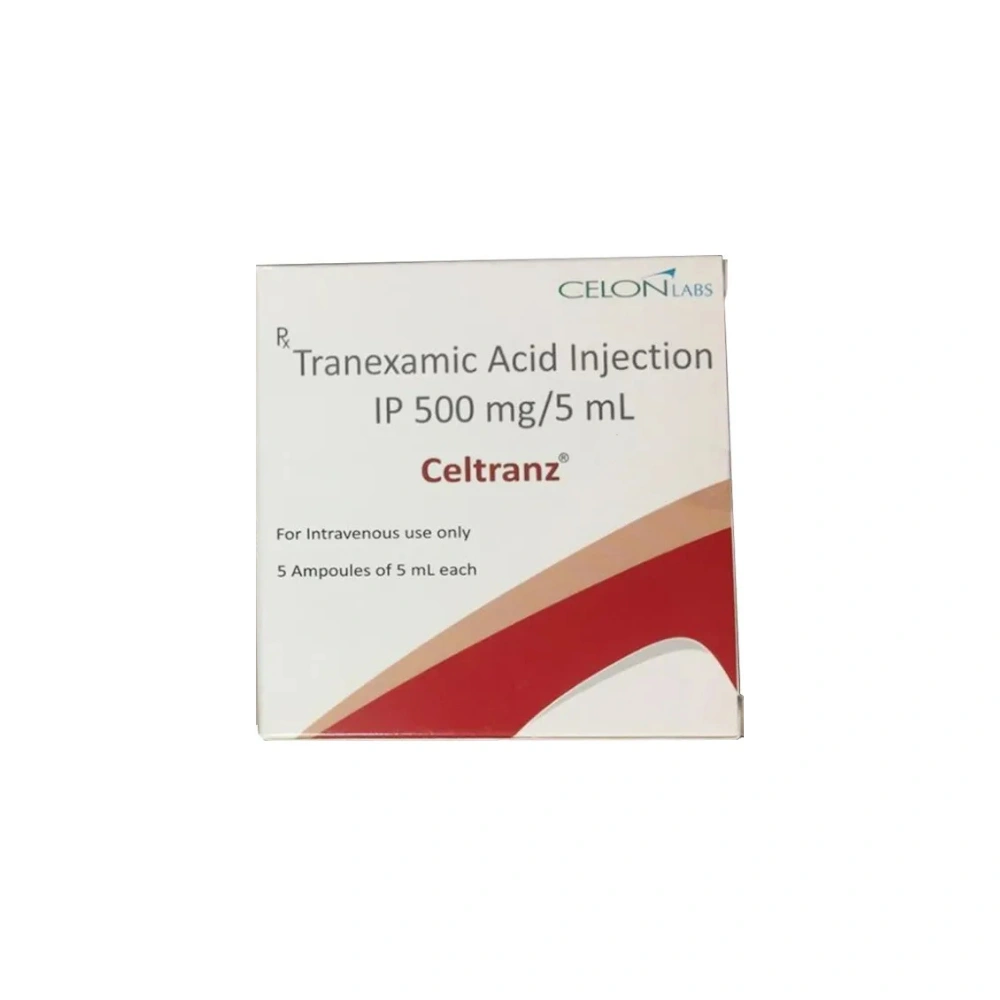
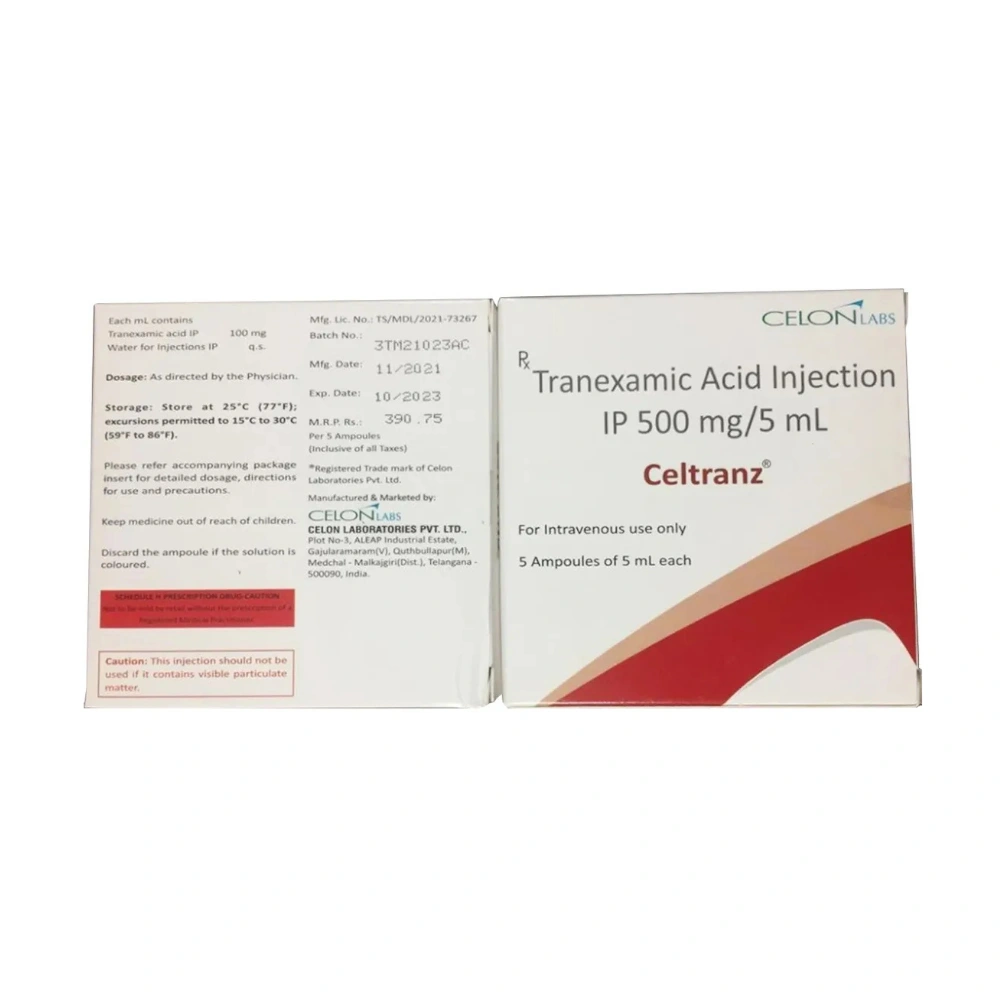
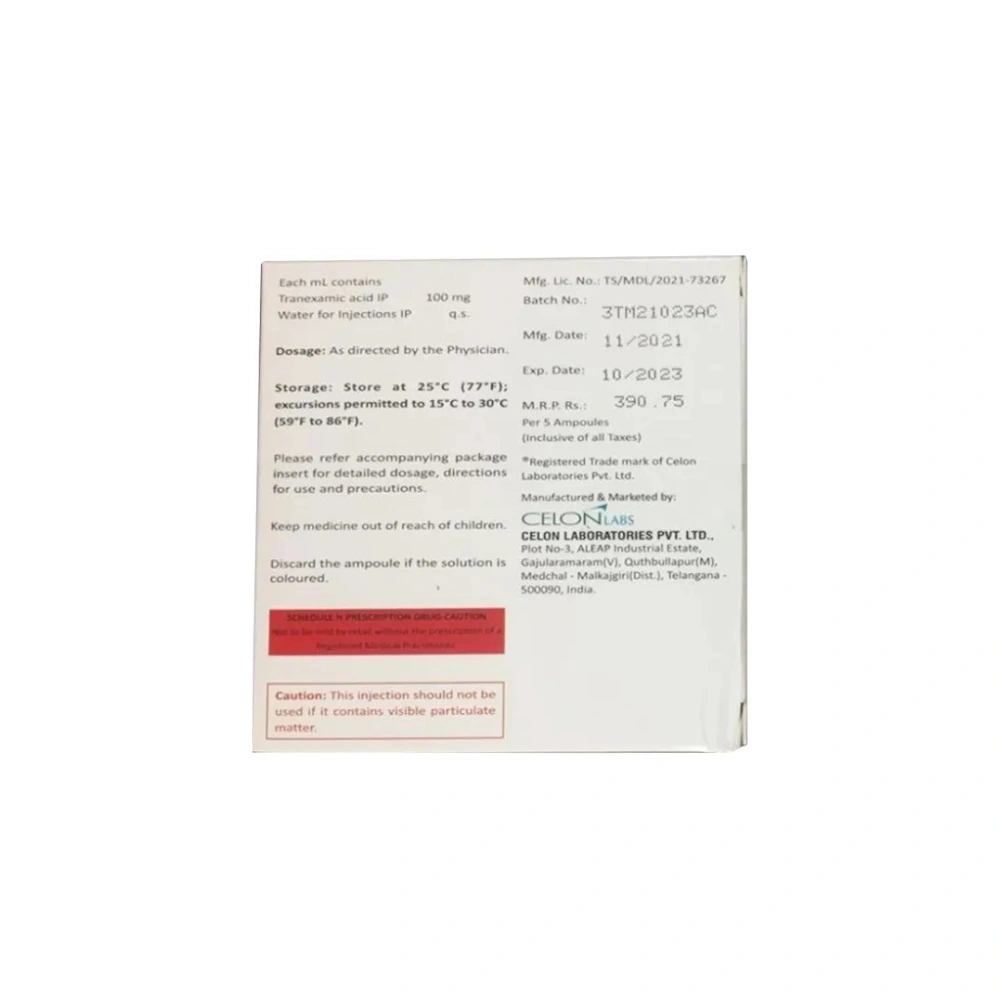
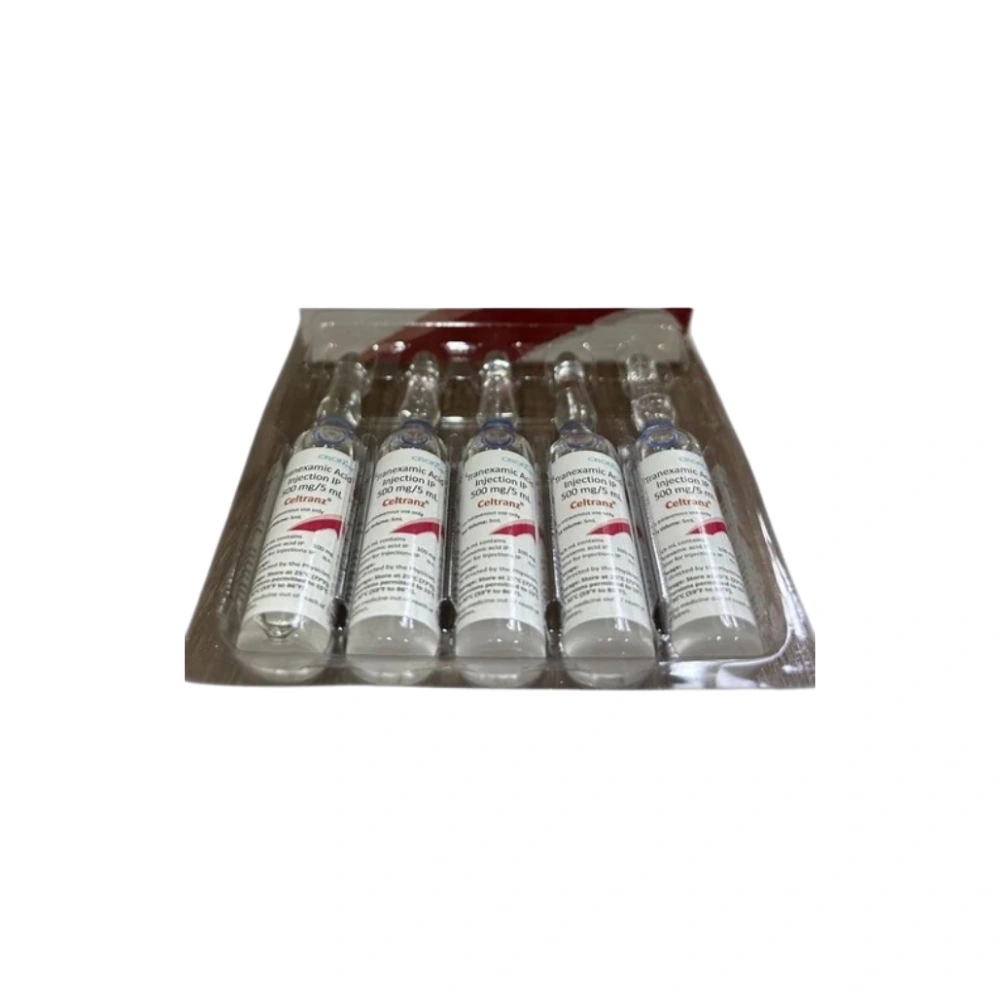
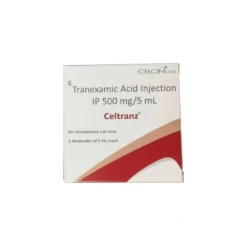
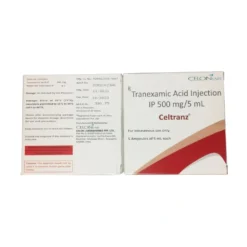
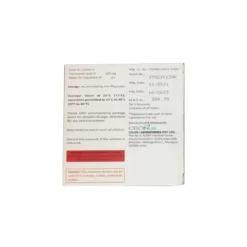
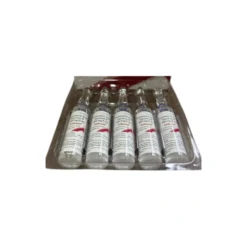
Tranexamic 500mg/5ml Injection
Price range: $75.00 through $150.00
| Pack Size | Price/Unit | Price | Quantity | |
|---|---|---|---|---|
| 5 Ampoules | $15.00/unit | $75.00 | ||
| 10 Ampoules | $12.00/unit | $120.00 | ||
| 15 Ampoules | $10.00/unit | $150.00 |
Looking for bulk / B2B pricing? |
Send Inquiry |
Availability : IN STOCK

Medically Reviewed by Damson Pharmacy Medical Review Board

Introduction to Tranexamic 500mg/5ml Injection
Tranexamic 500mg/5ml Injection is a synthetic antifibrinolytic agent used to control and prevent excessive bleeding. It belongs to the lysine analogue class of medications and is administered intravenously or intramuscularly in clinical settings to manage serious bleeding conditions across various medical and surgical situations effectively.
Tranexamic Injection works by blocking plasminogen activators and plasmin, enzymes responsible for breaking down fibrin blood clots. By inhibiting this fibrinolytic process, the medication helps stabilise existing clots, preventing their premature dissolution and allowing the body’s natural coagulation mechanism to control bleeding efficiently and effectively in critical situations.
Tranexamic 500mg/5ml Injection is widely used in surgical procedures, trauma care, obstetric emergencies, and dental treatments. It is particularly valuable in managing postpartum haemorrhage, heavy menstrual bleeding, and bleeding associated with haemophilia. Its rapid action and proven efficacy make it an essential medication in emergency and critical care medicine.
Uses of Tranexamic 500mg/5ml Injection
- Postpartum Haemorrhage (PPH)
- Surgical Bleeding Control
- Trauma-Induced Bleeding
- Heavy Menstrual Bleeding (Menorrhagia)
- Haemophilia Management
- Dental Extractions & Oral Bleeding
Dosages
The standard adult dose of Tranexamic 500mg/5ml Injection is 500mg to 1g (5ml to 10ml), administered slowly intravenously two to three times daily. In surgical settings, a loading dose is given before the procedure, followed by maintenance doses during and after surgery as clinically directed.
Dosage must be carefully reduced in patients with renal impairment, as Tranexamic is primarily excreted through the kidneys. In trauma and postpartum haemorrhage, 1g is administered intravenously over ten minutes, followed by a second gram if bleeding continues. Always administer under strict medical supervision only.
How Does Tranexamic 500mg/5ml Injection Works?
Tranexamic 500mg/5ml Injection works by competitively blocking lysine binding sites on plasminogen and plasmin molecules. This inhibits plasminogen activation and prevents plasmin from breaking down fibrin clots. By preserving clot integrity, the medication effectively halts excessive bleeding and supports the body’s natural haemostatic mechanism during critical bleeding situations.
Once administered, Tranexamic rapidly accumulates at the site of bleeding, reinforcing and stabilising existing fibrin clots against enzymatic dissolution. This antifibrinolytic action slows or completely stops haemorrhage, giving the body adequate time to complete natural clot consolidation. The result is effective, controlled bleeding cessation across surgical, traumatic, and obstetric haemorrhagic conditions.
Side Effects of Tranexamic 500mg/5ml Injection
Common Side Effects
- Nausea
- Vomiting
- Diarrhoea
- Headache
- Dizziness
- Fatigue
- Drowsiness
- Flushing
Serious Side Effects
- Neurological Effects
- Cardiovascular Effects
- Renal Effects
- Allergic & Immune Effects
- Eye-Related Effects
- Respiratory Effects
Drug Interaction
- Anticoagulant
- Thrombolytic
- Hormonal
- Antiplatelet
- Procoagulant
- Antifibrinolytic
- Cardiovascular
Storage
- Store Tranexamic 500mg/5ml Injection at room temperature, ideally between 15°C and 25°C always.
- Protect the injection from direct sunlight, ultraviolet light, and excessive heat at all times.
- Keep Tranexamic 500mg/5ml Injection in its original manufacturer packaging until ready for clinical administration.
- Always store the injection out of reach of children and unauthorised personnel in healthcare facilities.
- Do not freeze Tranexamic 500mg/5ml Injection, as freezing may compromise its chemical stability and potency.
- Inspect the solution visually before administration; discard if discoloration, cloudiness, or visible particles are observed.
- Once opened, any unused portion of Tranexamic 500mg/5ml Injection must be discarded immediately and safely.
- Check the expiry date carefully before use and never administer expired injection under any circumstances.
Warnings & Precautions
1. Pregnancy:
- Tranexamic 500mg/5ml Injection should be used during pregnancy only when clearly necessary and strictly under qualified medical supervision throughout treatment.
2. Breastfeeding:
- Nursing mothers should consult their physician before receiving Tranexamic Injection, as the drug may pass into breast milk and potentially affect the nursing infant.
3. Thromboembolic Risk:
- Tranexamic 500mg/5ml Injection must be used with extreme caution in patients with a history of thromboembolic disease, as it may further increase blood clot formation risk.
4. Slow Intravenous Administration:
- Tranexamic 500mg/5ml Injection must always be administered slowly intravenously by qualified healthcare professionals; rapid injection may cause severe hypotension, dizziness, and serious cardiovascular complications.
5. Haematuria Caution:
- In patients with upper urinary tract bleeding, Tranexamic Injection should be used cautiously, as clot formation within the renal pelvis may cause urinary obstruction and further complications.
6. Visual Monitoring:
- Patients receiving long-term Tranexamic therapy should undergo regular ophthalmological examinations, as prolonged use may potentially affect colour vision and overall visual function over time.
FAQs – Frequently Asked Questions
How is Tranexamic 500mg/5ml Injection administered?
How quickly does Tranexamic 500mg/5ml Injection work?
Can Tranexamic 500mg/5ml Injection be used for trauma bleeding?
Can Tranexamic 500mg/5ml Injection be self-administered at home?
| Pack Size | 10 Ampoules, 15 Ampoules, 5 Ampoules |
|---|---|
| Price/Unit | $10.00/unit, $12.00/unit, $15.00/unit |
Reviews
There are no reviews yet.