
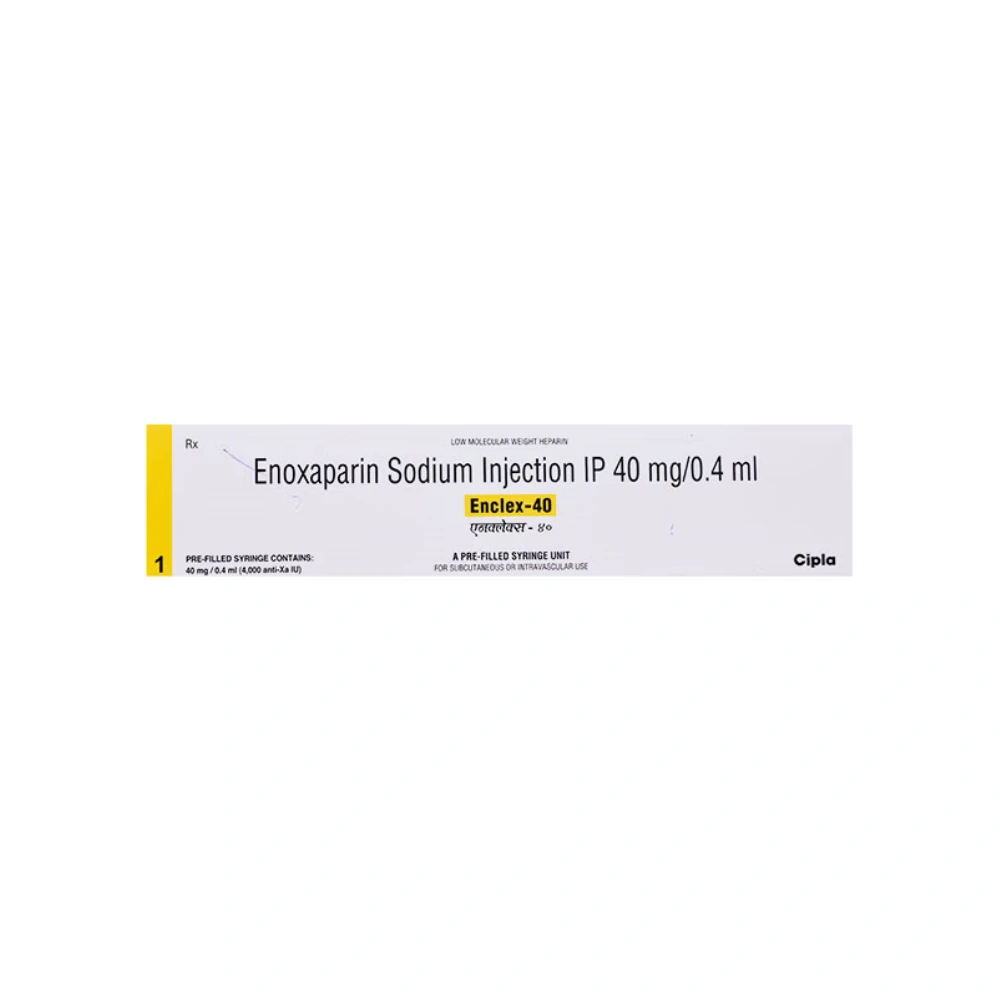
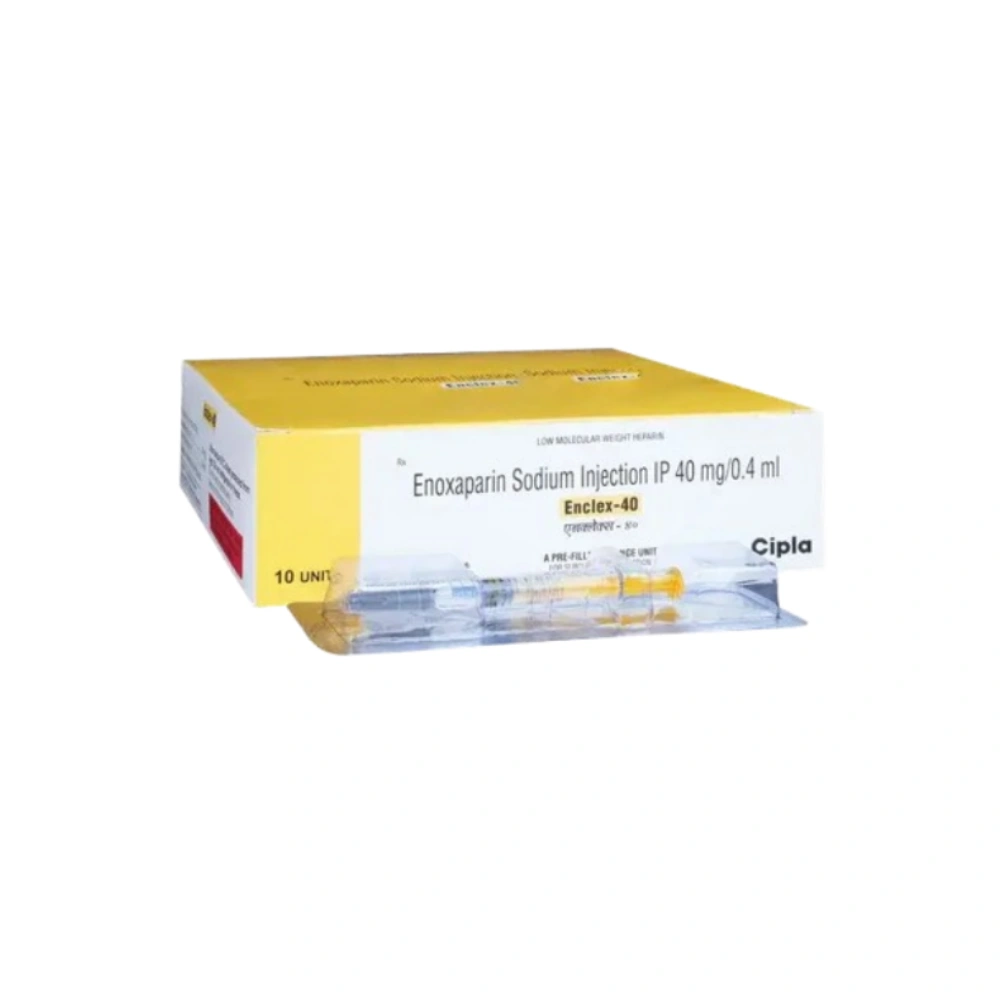
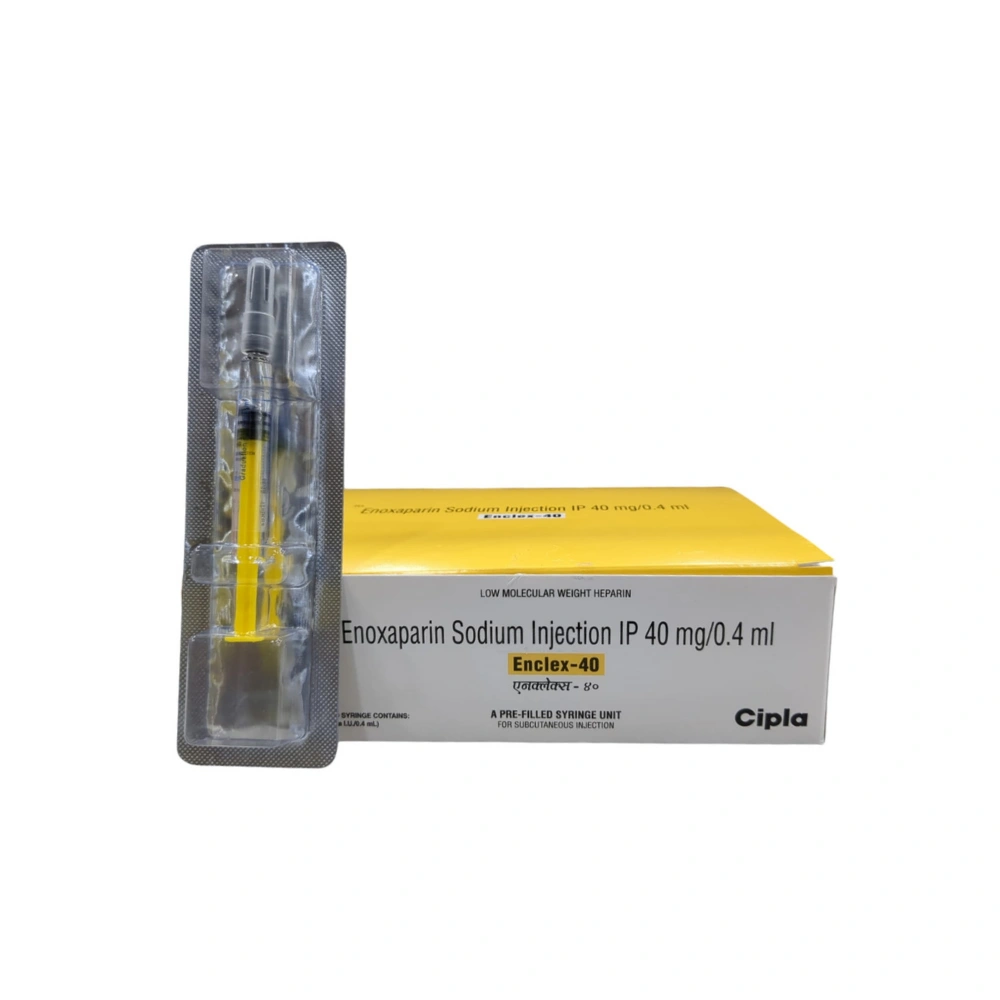
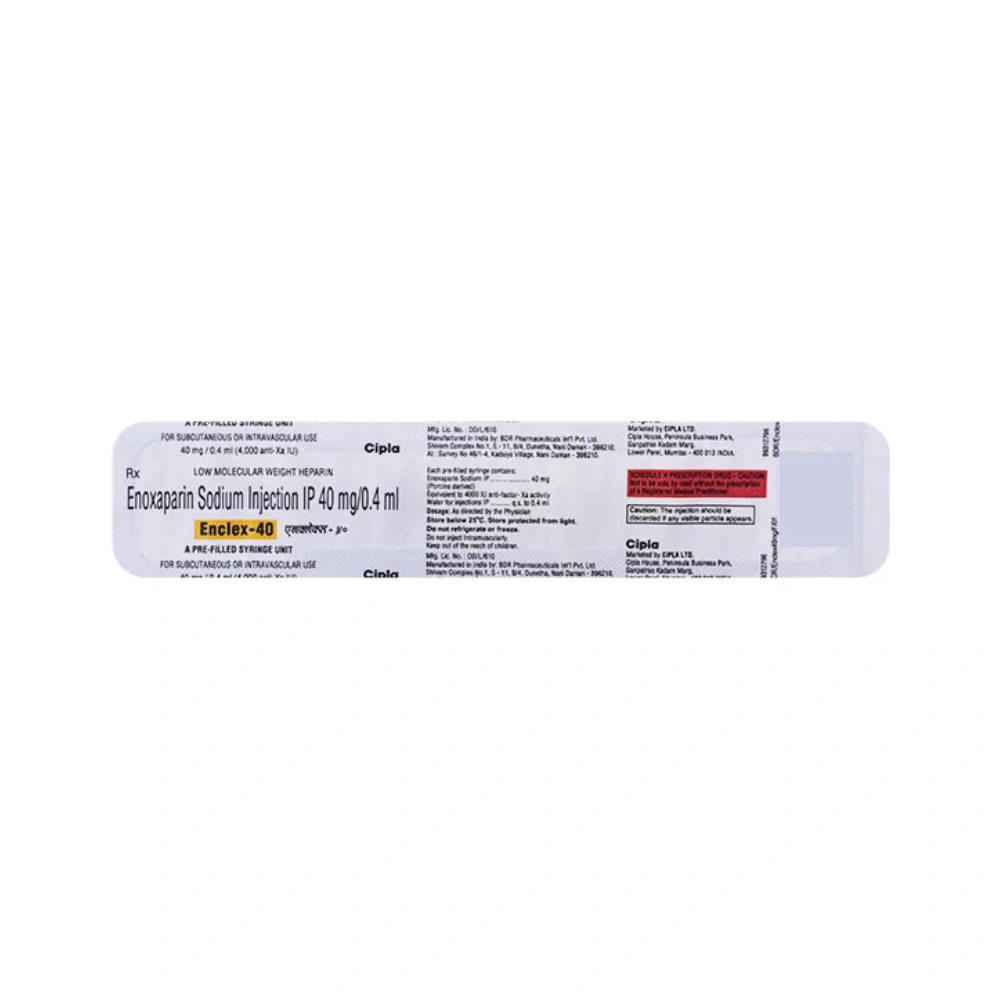
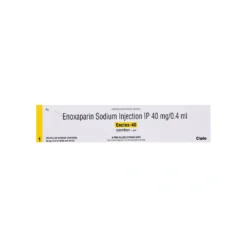
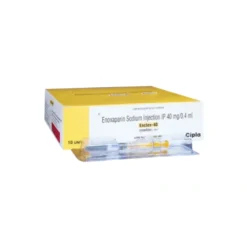
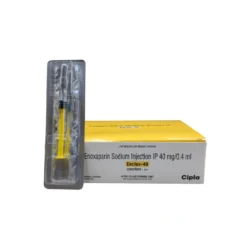
Enoxaparin 40mg Injection
Price range: $54.00 through $120.00
| Pack Size | Price/Unit | Price | Quantity | |
|---|---|---|---|---|
| 3 Packs | $18.00/unit | $54.00 | ||
| 5 Packs | $15.00/unit | $75.00 | ||
| 10 Packs | $12.00/unit | $120.00 |
Looking for bulk / B2B pricing? |
Send Inquiry |
Availability : IN STOCK

Medically Reviewed by Damson Pharmacy Medical Review Board

Introduction to Enoxaparin 40mg Injection
Enoxaparin 40 mg is a low molecular weight heparin (LMWH) used as an anticoagulant, or blood thinner. It is derived from standard heparin and administered subcutaneously to prevent and treat dangerous blood clot formation in the body.
It works by inhibiting Factor Xa and, to a lesser extent, thrombin in the coagulation cascade. This targeted action prevents fibrin clot formation without significantly affecting overall clotting time, offering a more predictable anticoagulant response than unfractionated heparin.
The 40 mg dose is primarily used for prophylaxis of deep vein thrombosis (DVT) and pulmonary embolism, especially in hospitalized patients undergoing surgery, those with limited mobility, or patients at moderate-to-high risk of thromboembolic complications.
It is given once daily as a subcutaneous injection, typically into the abdominal wall. Dosage may require adjustment in renal impairment. Key side effects include bleeding, bruising at the injection site, and rarely, heparin-induced thrombocytopenia (HIT).
Uses of Enoxaparin 40mg Injection
- DVT Prophylaxis
- Pulmonary Embolism Prevention
- Acute Coronary Syndrome (ACS)
- Treatment of Established DVT
- Pregnancy-related Thromboprophylaxis
- Hospitalised Medical Patients
- Haemodialysis Circuit Anticoagulation
Dosages
The standard prophylactic dose is 40 mg once daily, administered subcutaneously. In surgical patients, the first dose is given 12 hours before the procedure. Treatment typically continues for 7 to 10 days, or until the patient regains adequate mobility.
In patients with severe renal impairment (creatinine clearance below 30 mL/min), the dose is reduced to 20 mg once daily. For obese patients or those requiring therapeutic anticoagulation, dose adjustment based on body weight is recommended by the physician.
Other Doses
How Does Enoxaparin 40mg Injection Works?
Enoxaparin binds to antithrombin III, enhancing its activity and selectively inhibiting Factor Xa in the coagulation cascade. This blocks the conversion of prothrombin to thrombin, thereby interrupting clot formation without broadly suppressing the entire clotting system.
Unlike unfractionated heparin, enoxaparin has a predictable pharmacokinetic profile and higher bioavailability after subcutaneous injection. Its targeted Factor Xa inhibition produces a consistent anticoagulant effect, eliminating the need for routine laboratory monitoring during standard prophylactic use.
Side Effects of Enoxaparin 40mg Injection
Common Side Effects
- Injection site bruising
- Local irritation
- Nausea
- Headache
- Fever
- Swelling
- Diarrhoea
Serious Side Effects
- Severe bleeding
- Spinal haematoma
- Intracranial bleeding
- Thrombocytopenia (HIT)
- Anaphylactic reaction
- Paralysis risk
- Gastrointestinal haemorrhage
Drug Interaction
- Ketorolac
- SSRIs
- Corticosteroids
- Thrombolytics
- Ticagrelor
- NSAIDs
- Rivaroxaban
Storage
- Store at room temperature, ideally between 15°C and 30°C at all times.
- Do not freeze the injection; freezing permanently damages the solution and renders it unsafe.
- Keep away from direct sunlight and heat sources to preserve drug potency.
- Store in a dry place; avoid exposure to moisture or humidity during storage.
- Keep the prefilled syringe in its original packaging until it is ready for use.
- Store out of reach of children and pets to prevent accidental use or injury.
- Inspect the solution before use; discard if it appears discoloured or contains visible particles.
Warnings & Precautions
1. Renal Impairment:
- Use with caution in patients with reduced kidney function, as enoxaparin accumulates and significantly increases the risk of excessive anticoagulation.
2. Pregnancy & Breastfeeding:
- Use only under strict medical supervision during pregnancy; consult a doctor before using while breastfeeding, as safety data remains limited.
3. Spinal / Epidural Anaesthesia:
- Concurrent use with spinal or epidural procedures raises the risk of spinal haematoma, which can lead to permanent paralysis; careful timing is essential.
4. Elderly Patients:
- Older patients, especially women above 65 years, have reduced renal clearance and require closer monitoring due to higher sensitivity to anticoagulant effects.
5. Pre-surgical Disclosure:
- Always inform your surgeon and anaesthetist about enoxaparin use before any planned surgery, dental procedure, or invasive diagnostic intervention.
6. Obesity Consideration:
- Obese patients may require weight-based dose adjustments; the standard 40 mg dose may not provide adequate anticoagulation in individuals with high body weight.
7. Prosthetic Heart Valves:
- Enoxaparin is not approved for thromboprophylaxis in patients with prosthetic heart valves; use in this group carries a risk of valve thrombosis.
8. Platelet Monitoring:
- Regular platelet count monitoring is recommended during therapy, particularly between days 5 and 21, to detect any early signs of thrombocytopenia promptly.
Conclusion
Enoxaparin 40mg Injection is a clinically proven, reliable anticoagulant that plays a vital role in preventing and managing life-threatening blood clots. Its predictable action, ease of administration, and well-established safety profile make it a preferred choice across diverse patient populations worldwide.
However, its use demands careful medical supervision, appropriate dose adjustments, and awareness of precautions. Patients should always follow their doctor’s guidance, never self-medicate, and promptly report any unusual symptoms to ensure safe, effective, and successful anticoagulation therapy throughout the treatment period.
FAQs – Frequently Asked Questions
Can Enoxaparin 40mg Injection be used in children or paediatric patients?
What is the antidote if an overdose of Enoxaparin 40mg Injection occurs?
What should I tell my doctor before starting Enoxaparin 40mg Injection?
How long does a course of Enoxaparin 40mg Injection usually last?
| Pack Size | 10 Packs, 3 Packs, 5 Packs |
|---|---|
| Price/Unit | $12.00/unit, $15.00/unit, $18.00/unit |
Reviews
There are no reviews yet.