


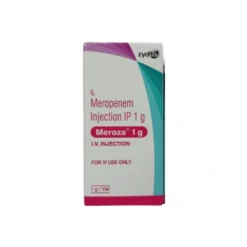


Meropenem 1 gm Injection
Price range: $60.00 through $150.00
| Pack Size | Price/Unit | Price | Quantity | |
|---|---|---|---|---|
| 3 Injections | $20.00/unit | $60.00 | ||
| 5 Injections | $18.00/unit | $90.00 | ||
| 10 Injections | $15.00/unit | $150.00 |
Looking for bulk / B2B pricing? |
Send Inquiry |
Availability : IN STOCK



Introduction to Meropenem 1gm Injection
Meropenem 1gm Injection is a broad-spectrum carbapenem antibiotic used to treat severe and life-threatening bacterial infections. It is administered intravenously in hospital settings and is effective against a wide range of gram-positive, gram-negative, and anaerobic bacterial organisms causing serious systemic infections.
Each vial contains 1000 mg of Meropenem as the active ingredient, formulated as a sterile powder for reconstitution. Once dissolved in a compatible diluent, it is delivered directly into the bloodstream via intravenous infusion, ensuring rapid therapeutic concentrations at the site of infection for maximum antibacterial effectiveness.
Meropenem 1gm Injection is indicated for treating infections of the lungs, abdomen, urinary tract, skin, brain, and bloodstream. It is particularly valuable in intensive care settings for managing hospital-acquired infections, septicemia, and infections caused by multidrug-resistant organisms that do not respond to conventional antibiotic therapies.
Uses of Meropenem 1gm Injection
- Severe Pneumonia
- Complicated Urinary Tract Infections
- Intra-Abdominal Infections
- Bacterial Meningitis
- Septicemia and Bloodstream Infections
- Skin and Soft Tissue Infections
- Febrile Neutropenia
- Bone and Joint Infections
How Does Meropenem 1gm Injection Work?
Meropenem 1gm Injection works by inhibiting bacterial cell wall synthesis. It binds to penicillin-binding proteins (PBPs) located on the bacterial cell membrane, blocking the final cross-linking stage of peptidoglycan synthesis. This disruption weakens the cell wall, causing bacteria to burst and die rapidly.
Unlike many antibiotics, Meropenem is resistant to most beta-lactamases, including extended-spectrum enzymes produced by resistant bacteria. Once administered intravenously, it rapidly distributes into infected tissues and fluids, achieving bactericidal concentrations at infection sites, effectively eliminating a broad range of gram-positive, gram-negative, and anaerobic bacterial pathogens.
Side Effects Of Meropenem 1gm Injection
Common Side Effects
- Nausea
- Vomiting
- Diarrhea
- Stomach pain
- Headache
- Dizziness
- Skin rash
- Itching
Serious Side Effects
- Severe allergic reaction
- Anaphylactic shock
- Seizures
- Stevens-Johnson Syndrome
- Toxic epidermal necrolysis
- Severe liver damage
- Acute kidney failure
- Clostridium difficile infection
Dosages
For most serious infections in adults, the standard dose of Meropenem 1gm Injection is 1000 mg administered intravenously every 8 hours. For severe infections like meningitis or febrile neutropenia, the same 1gm dose may be given every 6 to 8 hours as directed.
In pediatric patients weighing above 50kg, adult dosing applies. For children below 50kg, doses are calculated at 20 to 40mg per kilogram every 8 hours. Patients with renal impairment require dose adjustments based on creatinine clearance levels, always determined and supervised by a qualified healthcare professional.
Drug Interaction
- Aminoglycoside antibiotics
- Oral contraceptives
- Anticoagulant medications
- Nephrotoxic drugs
- Ganciclovir interaction
- Voriconazole combination
- Zidovudine interaction
- Live vaccines
Storage
- Store unreconstituted vials below 25°C in a cool, dry place always.
- Protect vials from direct sunlight, moisture, and excessive heat at all times.
- Keep all vials in their original packaging until ready for immediate use.
- Once reconstituted, use the solution immediately or within the recommended time period.
- Reconstituted solution should be stored in a refrigerator between 2°C to 8°C.
- Do not freeze reconstituted Meropenem solution as freezing affects stability and potency.
- Keep all vials strictly out of reach of children and pets.
- Discard any unused reconstituted solution after the recommended storage period safely.
Warnings & Precautions
- Patients with a known hypersensitivity to carbapenem, penicillin, or beta-lactam antibiotics should inform their doctor before receiving Meropenem 1gm Injection.
- Use with extreme caution in patients with pre-existing kidney disease, as dose adjustment is essential to prevent dangerous drug accumulation in the body.
- Meropenem 1gm Injection should only be administered in a clinical setting under direct supervision of a qualified healthcare professional with resuscitation facilities available.
- Patients with a history of seizures or central nervous system disorders require careful monitoring throughout the entire course of Meropenem 1gm Injection therapy.
- Prolonged use of Meropenem may lead to overgrowth of non-susceptible organisms, including fungi, requiring regular microbiological monitoring during extended treatment courses.
- Pregnant women should only receive Meropenem 1gm Injection when clearly necessary, as adequate human safety data during pregnancy remains insufficient and requires strict medical justification.
- Breastfeeding mothers should consult their physician before therapy, as Meropenem may pass into breast milk and potential effects on the nursing infant are not fully established.
- Liver function should be regularly monitored in patients with pre-existing hepatic conditions receiving Meropenem 1gm Injection to detect any deterioration in liver health promptly.
- Always complete the full prescribed course of Meropenem 1gm Injection therapy to prevent the development of antibiotic resistance and ensure complete bacterial eradication from the body.
Frequently Asked Questions
How long does a course of Meropenem 1gm Injection typically last?
Is Meropenem 1gm Injection safe for use in children?
How quickly does Meropenem 1gm Injection start working in the body?
Can Meropenem 1gm Injection be self-administered at home by patients?
| Pack Size | 3 Injections, 10 Injections, 5 Injections |
|---|---|
| Price/Unit | $15.00/unit, $18.00/unit, $20.00/unit |
Related Products

Antibiotics
Antibiotics
Reviews
There are no reviews yet