


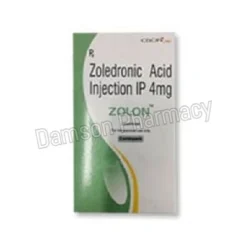

Zolon 4 mg Injection
Price range: $20.00 through $150.00
Zolon 4 mg Injection contains zoledronic acid, a bisphosphonate that inhibits osteoclast-mediated bone resorption. It is used for certain bone conditions and malignancy-associated hypercalcemia.
| Pack Size | Price/Unit | Price | Quantity | |
|---|---|---|---|---|
| 1 Injection | $20.00/unit | $20.00 | ||
| 5 Injections | $18.00/unit | $90.00 | ||
| 10 Injections | $15.00/unit | $150.00 |
Looking for bulk / B2B pricing? |
Send Inquiry |
Availability : IN STOCK



What is Zolon 4 mg Injection?
Zolon 4 mg Injection contains zoledronic acid, also known as zoledronate, which belongs to a class of medicines called bisphosphonates. Zoledronic acid is used in different formulations and doses for several bone-related conditions. However, the approved indications and dosing depend on the specific strength and formulation. Standard current prescribing information uses a 5 mg zoledronic acid infusion for osteoporosis, whereas 4 mg formulations are commonly used for cancer-related hypercalcemia and bone complications.
Zoledronic acid 4 mg may be used to help reduce skeletal complications in patients with multiple myeloma or bone metastases from solid tumors when given as part of appropriate cancer treatment. Zolon 4 mg may be used to treat hypercalcemia of malignancy, which is an abnormally high blood calcium level caused by cancer. Zoledronic acid is also used in other strengths for conditions such as Paget’s disease of bone. The dose and formulation used depend on the approved indication.
Uses of Zolon 4 mg Injection
Zolon 4 mg contains zoledronic acid, a bisphosphonate used under specialist medical supervision. Depending on the product’s approved labeling and the patient’s condition, 4 mg zoledronic acid formulations are commonly used for:
- Hypercalcemia of malignancy
- Management of skeletal complications in patients with multiple myeloma
- Management of bone metastases from certain solid tumors as part of appropriate cancer treatment
Zoledronic acid is also used in other strengths and formulations for osteoporosis and Paget’s disease. The strength and treatment schedule should not be considered interchangeable.
How Does Zolon 4 mg Injection Work?
Zolon 4 mg contains zoledronic acid, a bisphosphonate that binds strongly to bone. It inhibits osteoclasts, the cells responsible for breaking down bone tissue. By reducing osteoclast-mediated bone resorption, zoledronic acid decreases excessive calcium release from bone and can help reduce skeletal complications in appropriately selected patients.
Side Effects of Zolon
Common or Expected Side Effects
- Fever or flu-like symptoms
- Headache
- Fatigue
- Bone, joint, or muscle pain
- Nausea
- Low blood calcium levels
- Injection-related or acute-phase symptoms
Exact frequency classifications should come from the specific Zolon package insert.
Serious or Important Side Effects
- Severe allergic reaction
- Kidney impairment or acute kidney injury
- Severe or symptomatic hypocalcemia
- Osteonecrosis of the jaw
- Severe bone, joint, or muscle pain
- Atypical femoral fracture with long-term bisphosphonate exposure
- Eye inflammation in rare cases
Renal toxicity and hypocalcemia are particularly important with zoledronic acid.
Dosage and Administration of Zolon 4 mg Injection
Zolon 4 mg Injection must be administered intravenously by a trained healthcare professional and should not be self-administered. The dose, infusion schedule and need for dose adjustment depend on the condition being treated and the patient’s kidney function. Zoledronic acid 4 mg is administered by intravenous infusion over no less than 15 minutes in standard prescribing information.
How To Manage Side Effects?
Tell your healthcare professional if you develop fever, flu-like symptoms, muscle or joint pain, nausea or other symptoms after treatment. Maintain adequate hydration as directed by your healthcare team. Do not take medicines or supplements to manage symptoms unless your healthcare professional confirms they are appropriate. Seek medical attention for severe symptoms, reduced urination, muscle spasms, numbness or tingling, severe jaw pain, or signs of an allergic reaction.
Warning & Precautions
Zolon 4 mg Injection should be administered only under the supervision of a qualified healthcare professional. Before treatment, inform your healthcare professional about your medical history and all medicines or supplements you use.
- Kidney Function: Zoledronic acid can affect kidney function. Kidney function should be assessed before treatment, and the dose may need adjustment in some patients with renal impairment. Adequate hydration should be maintained as directed by the treating healthcare professional.
- Low Blood Calcium: Zoledronic acid can lower calcium levels in the blood. Existing hypocalcemia should be corrected before treatment. Calcium, vitamin D, or other supplementation may be recommended depending on the indication and individual clinical situation.
- Dental Health and Osteonecrosis of the Jaw: Zoledronic acid has been associated with osteonecrosis of the jaw, particularly in some patients receiving treatment for cancer. Tell your healthcare professional about dental problems and planned dental procedures before treatment. A dental examination may be recommended for patients with relevant risk factors.
- Allergic Reactions: Tell your healthcare professional if you have previously experienced an allergic reaction to zoledronic acid, other bisphosphonates, or any ingredient in the injection. Seek immediate medical attention if you develop severe swelling, difficulty breathing, or other signs of a serious allergic reaction.
- Pregnancy and Breastfeeding: Tell your healthcare professional if you are pregnant, planning to become pregnant, or breastfeeding. Zoledronic acid is generally avoided during pregnancy unless specifically determined to be necessary by a healthcare professional.
- Other Medicines: Inform your healthcare professional about all prescription medicines, over-the-counter medicines, and supplements you take. Some medicines may affect kidney function or calcium levels and may require additional monitoring during treatment.
- Monitoring During Treatment: Depending on the condition being treated, your healthcare professional may monitor kidney function, blood calcium and other relevant laboratory values before or during treatment.
Safety Advice
- Use Under Medical Supervision: Zolon 4 mg Injection should be administered intravenously by a qualified healthcare professional. Do not self-administer the injection.
- Follow the Prescribed Schedule: Receive the dose and treatment schedule recommended by your healthcare professional. Do not change the dose or frequency without medical advice.
- Inform Your Healthcare Provider: Tell your healthcare professional about your medical history, especially kidney problems, low calcium levels, dental problems, or previous allergic reactions to bisphosphonates. Also provide a complete list of medicines and supplements you use.
- Stay Adequately Hydrated: Maintain adequate hydration before and after treatment as directed by your healthcare professional, particularly because zoledronic acid can affect kidney function.
- Monitor for Side Effects: Report persistent or severe symptoms such as fever, muscle or joint pain, reduced urination, muscle spasms, numbness, or tingling to your healthcare professional.
- Seek Immediate Medical Attention: Get urgent medical help for difficulty breathing, severe swelling, chest pain, severe muscle spasms, or other serious or rapidly worsening symptoms.
- Follow-Up Monitoring: Attend scheduled follow-up appointments and any recommended blood tests to monitor kidney function, calcium levels, and other relevant parameters.
- Storage and Disposal: Zolon 4 mg Injection should be stored and disposed of according to the product packaging and healthcare facility requirements. Do not use the injection after its expiry date.
Frequently Asked Questions
How long should I take Zolon 4mg Injection?
How is Zolon 4mg Injection administered?
Can Zolon 4 mg Injection be used for osteoporosis?
How long does Zolon 4 mg Injection stay in the body?
Can Zolon 4 mg Injection be given to patients with kidney disease?
Do I need a dental check-up before receiving Zolon 4 mg Injection?
Can Zolon 4 mg Injection affect the kidneys?
Why is calcium monitored during Zolon 4 mg treatment?
| Pack Size | 1 Injection, 10 Injections, 5 Injections |
|---|---|
| Price/Unit | $15/unit, $18/unit, $20/unit |
Reviews
There are no reviews yet