
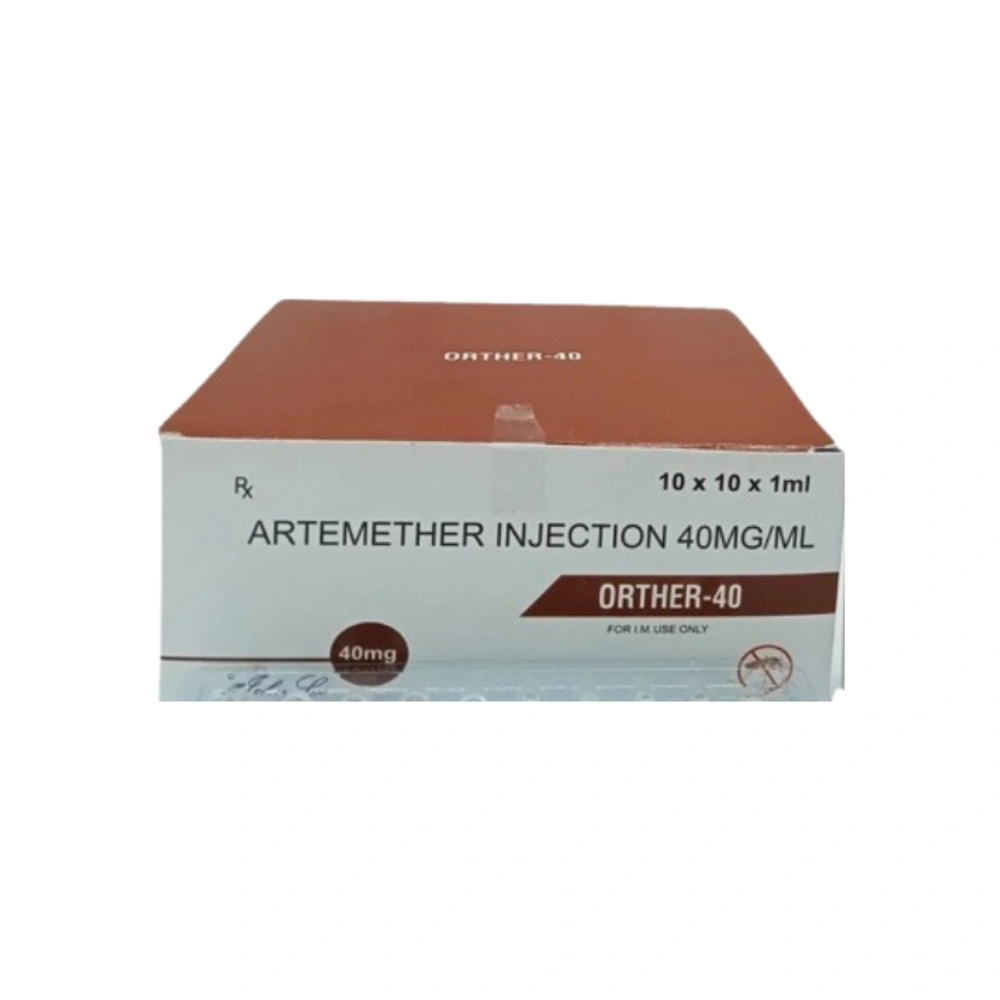
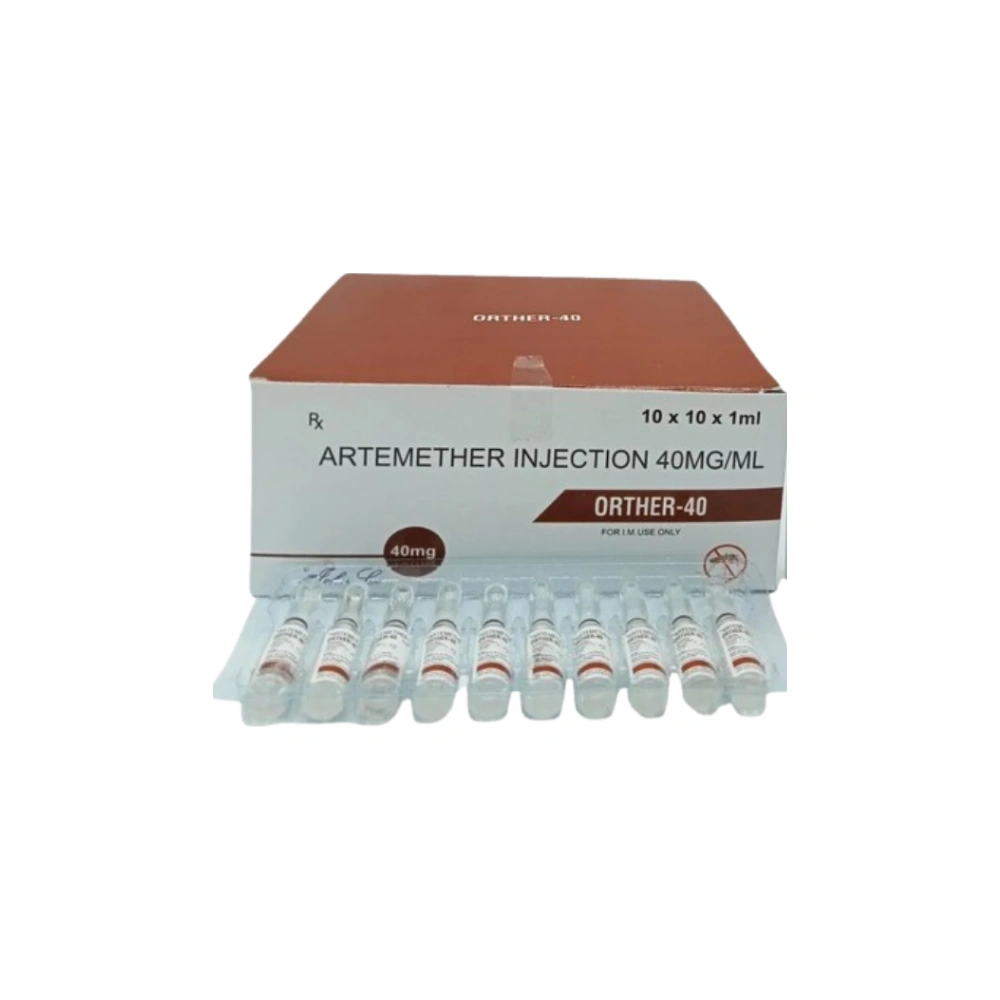
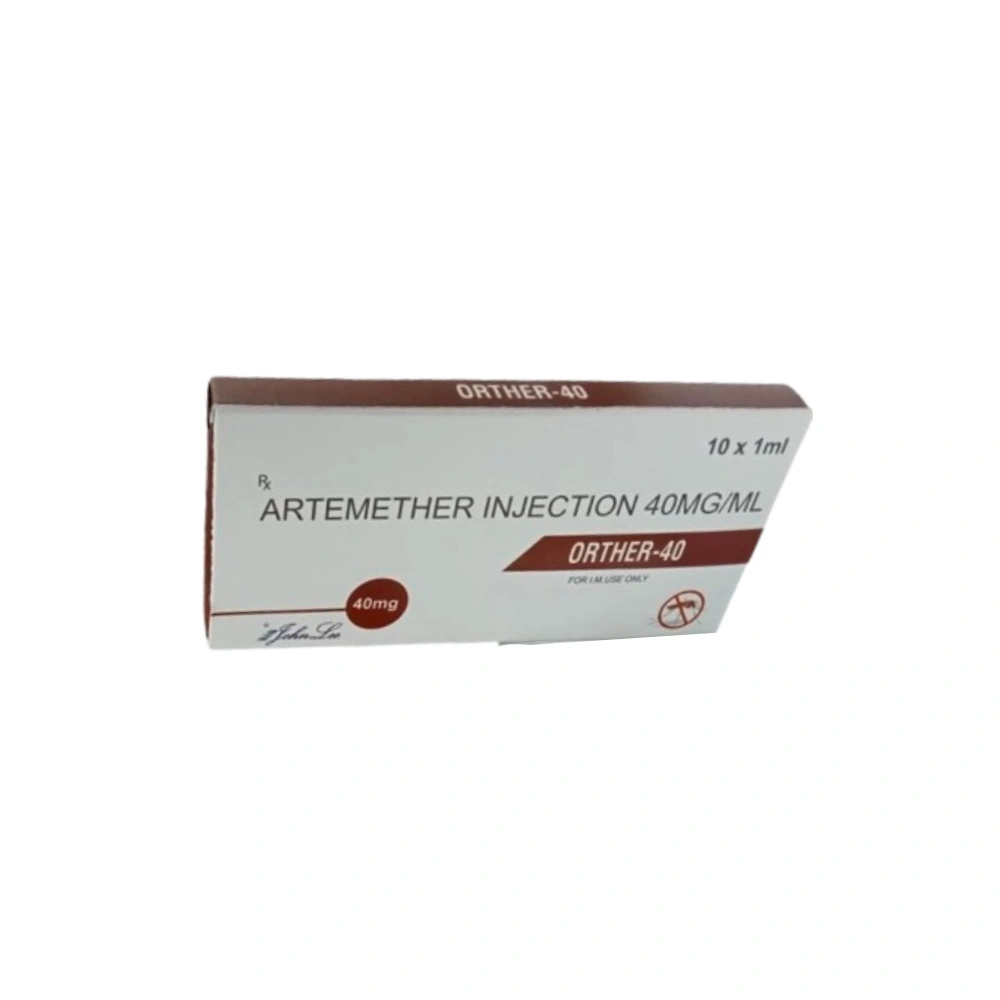
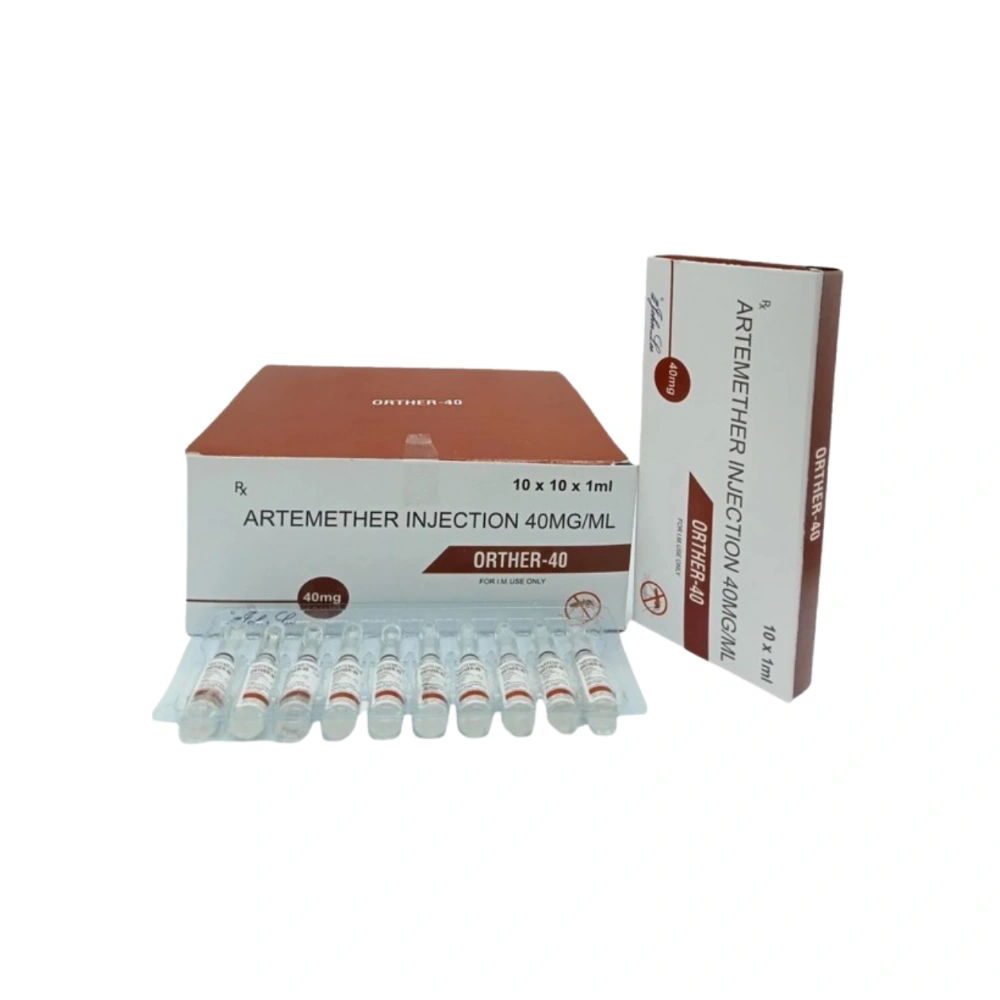
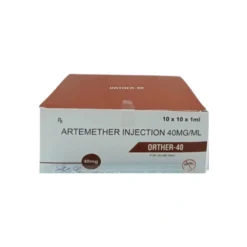
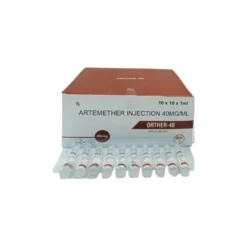
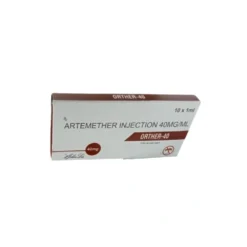
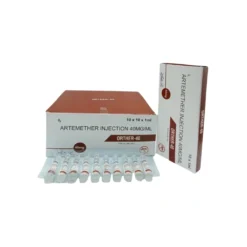
Artemether 40 mg Injection
Price range: $60.00 through $150.00
| Pack Size | Price/Unit | Price | Quantity | |
|---|---|---|---|---|
| 3 Packs | $20.00/unit | $60.00 | ||
| 5 Packs | $18.00/unit | $90.00 | ||
| 10 Packs | $15.00/unit | $150.00 |
Looking for bulk / B2B pricing? |
Send Inquiry |
Availability : IN STOCK



What is Artemether 40 mg Injection
Artemether 40 mg Injection contains artemether, an antimalarial medicine belonging to the artemisinin class.
Artemether is administered by intramuscular injection and is used in the treatment of malaria in specific clinical situations. Intramuscular artemether may be used as a parenteral alternative for severe malaria when artesunate is unavailable, in accordance with applicable malaria treatment guidelines.
Because severe malaria can progress rapidly and requires medical management, Artemether 40 mg Injection should be administered by a qualified healthcare professional.
Active Ingredient Artemether 40 mg
Artemether is a semisynthetic derivative of artemisinin and belongs to the artemisinin class of antimalarial medicines.
What Is Artemether 40 mg Injection Used For?
Artemether 40 mg Injection is used as a parenteral antimalarial treatment for severe malaria in situations where intramuscular artemether is indicated.
Current WHO guidance recommends parenteral artesunate in preference to intramuscular artemether for severe malaria. Intramuscular artemether may be used as an alternative when artesunate is unavailable.
The appropriate antimalarial treatment depends on the type and severity of malaria, the patient’s age and body weight, and the available treatment options.
How Does Artemether 40 mg Injection Work?
Artemether is an artemisinin derivative with antimalarial activity against malaria parasites.
After administration, artemether is converted in the body to dihydroartemisinin, its active metabolite. Artemisinin derivatives are activated in the malaria parasite and produce reactive intermediates that damage essential parasite components. This interferes with parasite survival and helps reduce the number of malaria parasites in the bloodstream.
Dosage and Administration
Artemether 40 mg Injection should be administered intramuscularly by a qualified healthcare professional.
The dose is based primarily on the patient’s body weight and the severity of malaria. The strength of the injection does not determine the individual dose by itself.
For severe malaria, WHO guidance describes an initial artemether dose of 3.2 mg/kg body weight intramuscularly, followed by 1.6 mg/kg body weight intramuscularly once daily. Artemether should be used according to the applicable malaria treatment protocol and the product-specific prescribing information.
Parenteral treatment should be continued until the patient can tolerate oral treatment, after which an appropriate complete antimalarial regimen should be given according to treatment guidelines.
Do not determine or change the injection dose without professional medical supervision.
Strengths and Substitutes
How Is Artemether 40 mg Injection Given?
Artemether injection is given intramuscularly.
The injection should be administered by a qualified healthcare professional using the appropriate injection technique. It should not be self-administered.
The healthcare professional determines the dose, injection schedule, and duration of parenteral treatment according to the patient’s body weight, clinical condition, and applicable malaria treatment guidelines.
Side Effects of Artemether 40 mg Injection
Artemether may cause adverse effects in some patients.
Possible effects can include:
- Injection-site discomfort
- Nausea
- Vomiting
- Headache
- Dizziness
- Abdominal discomfort
The type and frequency of adverse effects may vary depending on the patient, severity of malaria, and the specific product formulation.
When to Seek Medical Attention
Medical attention should be sought if a patient develops a severe or unexpected reaction during treatment, including:
- Difficulty breathing
- Facial or throat swelling
- Severe allergic symptoms
- Severe or persistent dizziness
- Significant changes in heart rhythm or other concerning symptoms
Patients receiving treatment for severe malaria require appropriate clinical monitoring because the underlying infection itself can cause serious complications.
Warnings and Precautions
Use Under Medical Supervision
Artemether 40 mg Injection should be administered by a qualified healthcare professional. Severe malaria requires prompt medical assessment and appropriate antimalarial treatment.
Confirm the Diagnosis
Malaria treatment should be based on appropriate clinical assessment and, where feasible, laboratory confirmation of malaria. Treatment selection depends on the species of Plasmodium, disease severity, local resistance patterns, and applicable treatment guidelines.
Severe Malaria
Severe malaria is a medical emergency. Current WHO guidance recommends parenteral artesunate as the preferred treatment for severe malaria. Intramuscular artemether is an alternative when artesunate is unavailable.
Pregnancy
If you are pregnant or think you may be pregnant, inform the healthcare professional before treatment. The choice of antimalarial treatment should be based on the clinical situation and applicable malaria treatment guidelines.
Breastfeeding
Inform the healthcare professional if you are breastfeeding before receiving treatment. The healthcare professional can assess the appropriate treatment based on the clinical circumstances and product information.
Follow-Up Treatment
Parenteral artemether is not necessarily the complete antimalarial treatment course. Once a patient can tolerate oral treatment, an appropriate oral antimalarial regimen may be required according to established treatment guidelines.
Drug Interactions
Tell the healthcare professional about all medicines and treatments being used before receiving Artemether 40 mg Injection.
The healthcare professional should review the patient’s medicines when selecting and administering antimalarial treatment, particularly when other medicines may affect treatment choice or safety.
Do not start or stop another medicine without appropriate medical advice during malaria treatment.
Storage
Store Artemether 40 mg Injection according to the storage conditions stated on the product packaging and manufacturer’s prescribing information.
Keep the injection in its original packaging until use and protect it from conditions specified on the product label.
Keep all medicines out of the reach of children.
Do not use the product after its expiry date or if the packaging or injection appears damaged.
Frequently Asked Questions
What is Artemether 40 mg Injection?
What is Artemether 40 mg Injection used for?
Is Artemether 40 mg Injection an antibiotic?
Does Artemether 40 mg Injection treat bacterial infections?
How is Artemether 40 mg Injection administered?
How is the dose of Artemether Injection determined?
Is Artemether Injection the preferred treatment for severe malaria?
Can Artemether 40 mg Injection be used for malaria prevention?
How long is Artemether Injection given?
Can Artemether 40 mg Injection be self-administered?
| Pack Size | 10 Injections, 20 Injections, 30 Injections |
|---|---|
| Price/Unit | $15.00/unit, $18.00/unit, $20.00/unit |
Reviews
There are no reviews yet