


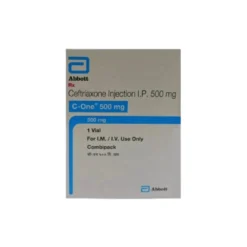


Ceftriaxone 500 mg
Price range: $54.00 through $120.00
| Pack Size | Price/Unit | Price | Quantity | |
|---|---|---|---|---|
| 3 Injections | $18.00/unit | $54.00 | ||
| 5 Injections | $15.00/unit | $75.00 | ||
| 10 Injections | $12.00/unit | $120.00 |
Looking for bulk / B2B pricing? |
Send Inquiry |
Availability : IN STOCK



Introduction to Ceftriaxone 500 mg Injection
Ceftriaxone 500mg Injection is a broad-spectrum, third-generation cephalosporin antibiotic administered parenterally. It belongs to the beta-lactam class and works by inhibiting bacterial cell wall synthesis. It is available as a sterile powder for reconstitution and administered via intramuscular or intravenous routes.
Ceftriaxone binds to penicillin-binding proteins on bacterial cell walls, disrupting peptidoglycan cross-linking and causing cell lysis. It exhibits bactericidal activity against a wide range of gram-positive and gram-negative organisms, making it effective even against resistant bacterial strains commonly encountered in clinical settings.
Ceftriaxone 500mg Injection is prescribed for treating serious infections including pneumonia, meningitis, septicemia, urinary tract infections, typhoid, and surgical prophylaxis. It is also used in gonorrhea treatment and Lyme disease. Its long half-life allows convenient once-daily dosing in most clinical conditions.
What are the Uses of Ceftriaxone 500 mg Injection?
Here are the uses of Ceftriaxone 500mg Injection:
- Respiratory Tract Infections
- Meningitis
- Urinary Tract Infections (UTIs)
- Skin and Soft Tissue Infections
- Bone and Joint Infections
- Intra-abdominal Infections
- Typhoid Fever (Enteric Fever)
Strengths and Variants of Ceftriaxone 500mg Injection
How Does Ceftriaxone 500 mg Injection Work?
Ceftriaxone works by binding to penicillin-binding proteins located on bacterial cell walls. This binding inhibits peptidoglycan cross-linking, a critical process for cell wall synthesis. Without a stable cell wall, bacteria lose structural integrity, leading to cell lysis and ultimately bacterial death.
Ceftriaxone exhibits potent bactericidal activity against a broad spectrum of gram-positive and gram-negative organisms. It resists breakdown by many beta-lactamase enzymes, enhancing its effectiveness against resistant strains. Its long half-life of approximately 6–8 hours ensures sustained therapeutic drug concentrations throughout the body.
Side Effects of Ceftriaxone 500 mg Injection
Common Side Effects
- Injection Site Reactions
- Diarrhea
- Nausea and Vomiting
- Skin Rash
- Headache
- Dizziness
Serious Side Effects
- Severe Allergic Reaction (Anaphylaxis)
- Clostridioides difficile-Associated Diarrhea (CDAD)
- Hemolytic Anemia
- Stevens-Johnson Syndrome (SJS)
- Biliary Pseudolithiasis
- Renal Toxicity (Nephrotoxicity)
Drug Interactions
- Antibiotics
- Anticoagulants
- Calcium-Containing Products
- Diuretics
- Probenecid
- Immunosuppressants
- Antifungals
- NSAIDs
Storage
- Temperature Store Ceftriaxone 500mg Injection at room temperature below 25°C always.
- Avoid Freezing Never freeze Ceftriaxone vials, as freezing damages the active pharmaceutical ingredient.
- Protect from Light Keep vials protected from direct sunlight and artificial light sources always.
- Dry Storage Store in a cool, dry place away from moisture and humidity.
- Reconstituted Solution Storage Reconstituted Ceftriaxone solution must be used within 6 hours at room temperature.
- Refrigerated Reconstituted Solution If refrigerated at 2°C–8°C, reconstituted solution remains stable for 24 hours.
- Keep Out of Reach of Children Always store Ceftriaxone safely away from children’s reach and access.
Warnings & Precautions
1. Allergy History:
- Inform your doctor about any known allergy to cephalosporins, penicillins, or any other antibiotics before starting Ceftriaxone therapy.
2. Renal Impairment:
- Use Ceftriaxone cautiously in patients with kidney disease; dose adjustment and regular renal function monitoring are strongly recommended throughout treatment.
3. Hepatic Impairment:
- Patients with severe liver disease require careful dose adjustment, as Ceftriaxone is partially metabolized and excreted through the biliary system.
4. Neonatal Precaution:
- Ceftriaxone is contraindicated in premature newborns and neonates with hyperbilirubinemia, as it may displace bilirubin and cause serious neurological complications.
5. Pregnancy and Breastfeeding:
- Pregnant and breastfeeding women should use Ceftriaxone only when clearly necessary and strictly under qualified medical supervision throughout the entire treatment course.
6. Superinfection Risk:
- Prolonged use of Ceftriaxone may encourage overgrowth of non-susceptible organisms; regular clinical monitoring is essential to detect any secondary infections early.
7. Proper Reconstitution:
- Always reconstitute Ceftriaxone using the correct diluent, following manufacturer guidelines precisely to ensure drug stability, sterility, and accurate dosage delivery.
8. Antibiotic Resistance Awareness:
- Ceftriaxone should only be prescribed for confirmed or strongly suspected bacterial infections to prevent unnecessary antibiotic resistance development in the community.
Conclusion
Ceftriaxone 500 mg Injection is a powerful, broad-spectrum antibiotic that effectively treats a wide range of serious bacterial infections. Its once-daily dosing, strong bactericidal action, and proven clinical efficacy make it a trusted and reliable choice among healthcare professionals worldwide for managing life-threatening infections.
However, Ceftriaxone 500 mg Injection must always be used responsibly under qualified medical supervision, following prescribed dosage, storage guidelines, and necessary precautions. Avoiding self-medication, completing the full treatment course, and reporting any adverse reactions promptly ensures safe, effective therapy and helps prevent the growing global threat of antibiotic resistance.
Frequently Asked Questions
Is a prescription required for Ceftriaxone 500mg Injection?
How many days is Ceftriaxone 500mg Injection given?
Can alcohol be consumed while taking Ceftriaxone 500mg Injection?
What should I do if I miss a dose of Ceftriaxone 500mg Injection?
| Pack Size | 3 Injections, 10 Injections, 5 Injections |
|---|---|
| Price/Unit | $12.00/unit, $15.00/unit, $18.00/unit |
Related Products

Antibiotics
Antibiotics
Reviews
There are no reviews yet