
Erectile Dysfunction Information
Erectile Dysfunction in Young Men Under 40: Causes and Solutions


Jun
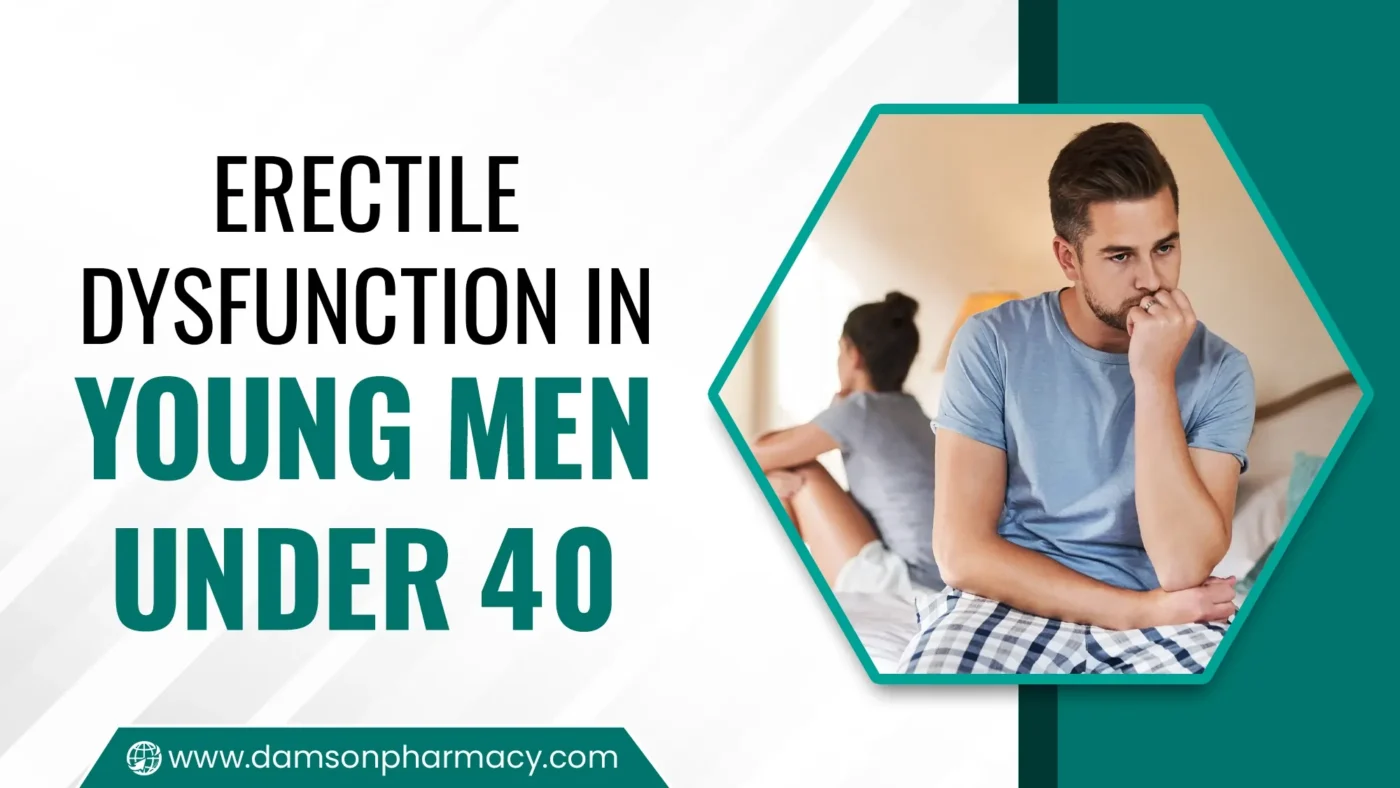
Erectile dysfunction in young men is more common than anyone would like to admit. One in four men visiting ED clinics today is under 40. This condition has been associated with aging; its increasing prevalence among younger populations raises serious questions.
Why is it happening? What has changed? And what can actually be done about it? This article answers all three problems of erectile dysfunction in young people and offers evidence-based approaches to dealing with it.
Why it’s Happening Among Young Men?
Modern life plays a major role here. Chronic sleep disruption, sedentary habits, a high stress work culture, ultra processed diets, and unprecedented access to pornography have all created conditions that impair sexual function often before traditional risk factors like heart disease or diabetes become apparent.
It’s still hard for most men to talk about. There’s shame attached to it, which means the true number is definitely an undercount. Men look for symptoms, close tabs, and hope the problem will resolve itself.
Cause of ED in Men Under 40
Understanding what is behind the problem is the only way to properly treat it. The causes of erectile dysfunction in young men are rarely singular. In most cases, two or three interrelated factors reinforce each other.
How the landscape breaks down:
- Psychological Factors
- Hormonal Disorders
- Vascular Problems
- Neurological Factors
- Metabolic Problems
- Behavioral
The challenge with young men is that standard thinking often dismisses the physical and relies entirely on psychology. This is a mistake. While psychological factors are common, body image deserves equal attention, especially given how metabolic and vascular dysfunction can begin now.
Get Up to 90% Off on Medicines

Tadalafil & Dapoxetine
Sildenafil Citrate

Vardenafil

Sildenafil Citrate
Erectile Dysfunction in Young Men: Psychological Vs Physical
It is important to distinguish between these two types; the course of treatment depends entirely on it.
Psychogenic ED: When the Brain is Blocked?
Psychogenic ED is driven purely by psychological and emotional factors. Blood flow, nerve function, and hormone levels may be intact, but erections fail as the brain sends wrong signals and depression, generalized anxiety disorder, stress, unresolved personal conflicts, low self-esteem, or even degrading sexual experiences can trigger this pattern.
If a man is still accompanied by a strong, spontaneous erection (what is called a nocturnal erection in medical terms) when he wakes up, it indicates the state of the body’s physiological functions. Sexual arousal and erection during sleep are not affected by conscious anxiety or anxiety about sexual function.
Physical ED: A Signal Worth Investigating
And when nocturnal erections are also absent or noticeably low, it indicates a physical problem. And for young people, it requires appropriate diagnostic tests, not just reassurance. Physical ED under 40 may be warning for cardiovascular disease, hormonal imbalance, or metabolic dysfunction conditions that benefit significantly from early recognition.
In many cases involve both. The problem starts with a physical action, then the anxiety worsens, and it is difficult to tie these two factors together in a pattern that is difficult to break without addressing them simultaneously.
Performance Anxiety:
When Fear Becomes a Problem?
The next time the opportunity for sex comes, that fear comes first. Erection fails again and the fear gets worse. This is performance anxiety in its clinical form. This situation may continue for months or years without any directed intervention.
A few consistently hinder sexual performance, such as performance anxiety. It’s one of the most self-perpetuating problems in men’s sexual health, and it almost always starts with a single unexpected failure. A difficult experience, whether it’s alcohol, stress, fatigue, or nerves with a new partner, leads to fear.
And here lies the basic concept: cortisol, the body’s main stress hormone. When its level chronically rises, it inhibits testosterone production, increases inflammation, and puts the nervous system into a low-intensity “fight or flight” state. And this is the complete opposite of the physiological conditions necessary for sexual arousal and erection.
Porn Induced ED:
A Problem That is Catching Up with the Data
This is a controversial topic in sexual medicine but the evidence supporting it is worth serious consideration. High pornographic material causes intense dopamine releases. The brain adapts by reducing dopamine receptors – a process called desensitization.
Dopamine sensitivity in reward circuitry that drives motivation and excitement breaks down real world sexual encounters that involve gradual buildup, emotional connection, and real sensory input can no longer produce the neural engagement that the brain has come to expect.
A man who can achieve strong erection during solo use but loses it with his partner. The brain has simply been rewired to a type of stimulation that real intimacy cannot replicate. Intervention is a sustained period of abstinence from pornography, allowing the brain’s dopamine system to return to its baseline sensitivity. This takes weeks to months and is rarely linear.
Lifestyle Induced ED:
How Daily Habits Affect Sexual Health?
Alcohol is a major contributor to its intense sedative effect on nerve signaling and blood flow. Chronic heavy drinking increases estrogen levels, depletes zinc, and gradually impairs liver function all of which create a hormonal environment that is unfavorable for erectile quality.
Smoking narrows blood vessels throughout the body. The arteries in the penis, which are already small, are among the first to show impaired function. The evidence linking smoking to ED in young men is consistent and dose dependent. This is not ancillary advice. For many men, it is the primary treatment.
Sleep is the most neglected substrate in testosterone health. Many studies confirm that sleeping less than five hours a night for just one week leads to a noticeable decrease in testosterone levels in healthy young people. Testosterone is produced mainly during the slow wave sleep phase. Reduce the quality or duration of sleep, and testosterone production drops proportionally.
What Happen Inside the Body?
Hormone Imbalance
This is more prevalent problem than most people realize. Moderate testosterone levels in young people have steadily declined across generations due to sedentary lifestyles, lack of sleep, poor diet quality, and increased exposure to endocrine disrupting chemicals (EDCs) found in plastics, pesticides, and many consumer products. Low testosterone associated with prolactin that inhibits testosterone axis.
Vascular Health
Vascular health in young men is rarely discussed because it is assumed not to be a concern until middle age. Blood should flow to the tissues of the penis quickly and remain in them, supported by the elasticity of the veins. Any abnormality in this process, whether it is caused by a primary malfunction of the endothelium, mild chronic inflammation, or atherosclerosis, directly adversely affects the erection.
Insulin Resistance
Men who are overweight, eat a poor diet or spend most of their time sitting. Affects the production of nitric oxide (NO), the molecule responsible for signaling relaxation of smooth muscles in arteries of penis and significantly increasing blood flow to it. Reduced nitric oxide production is direct pathway linking metabolic impairment and ED.
Treatment: What Evidence Supports This?
Best results depend on the cause of the problem.
Lifestyle As Treatment
Compound resistance training movements performed consistently three to four times per week have strong evidence of improving testosterone levels, increasing nitric oxide production, and enhancing vascular function. Pelvic floor exercises are less well-known but clinically supported for improving erections and reducing premature ejaculation. These interventions don’t require a prescription. They require consistency, which is a hard thing to ask for many men.
Psychotherapy
For cases driven by psychological and performance anxiety, psychological intervention is not optional; it is central. CBT has strong evidence to break the cycle of fear of failure. Sex therapy where appropriate, addresses the relationship dynamics and communication patterns that perpetuate the problem. Mindfulness training helps men re-establish themselves in the sensory experience rather than self-monitoring
Medical Options
PDE5 is drug for erectile dysfunction that work by enhancing nitric oxide signals, relaxing muscles in blood vessels of penis and facilitating blood flow. Without addressing lifestyle, hormones or psychological aspects, outcomes will be reduced. Hormonal correction under medical supervision can restore levels where low testosterone is main cause, which can improve quality of erection.
Nutritional Support
Men are doing research on the best testosterone booster for ED. Zinc plays important role in testosterone production and its deficiency is quite common in men with poor dietary quality. Vitamin D deficiency is common in populations with limited sun exposure, which has been associated with low testosterone in several studies. Ashwagandha can help reduce cortisol and supporting testosterone in men. Magnesium is involved in biochemical reactions for testosterone metabolism.
Conclusion
ED has been framed as an older man’s issue, its rising prevalence among men under 40 is a wake-up call regarding the toll modern lifestyle, chronic stress, and digital habits take on the human body. ED is not a reflection of masculinity; it is a complex physiological and psychological gauge indicating that something in the body’s ecosystem is out of balance.
Frequently Asked Questions
Can ED in Young Men Actually be Reversed?
Yes, when root cause is psychological, hormonal, or lifestyle-related, which it usually is in younger men, proper treatment leads to full recovery. The earlier you catch it, the cleaner the resolution. Waiting and hoping rarely works in your favor.
How Do I Know If My ED is Psychological or Physical?
Check your mornings if you are waking up with strong spontaneous erections but struggling during sex, then issue is psychological due to anxiety, stress, or psychogenic ED. If no morning erections, then issue is physical. So, blood tests plus clinical checkup is right next move.
Is Porn Induced ED a Real Medical Condition?
Pornography finds real-world intimacy increasingly difficult, not because of physical problems, because brain has rewired to expect extreme stimulation. The fix is abstinence, sustained over weeks to months. It’s not comfortable, but improvement is real for those who follow through.
What Lifestyle Make Biggest Difference?
Low sleep kills testosterone faster than most people realise. After that regular resistance training, cutting alcohol, quitting smoking, and cleaning up diet consistently can produce noticeable improvement within four to eight weeks.
Reference
Add Damson Pharmacy as a Preferred Source to see more of our trusted content across Google Search, AI Overviews, and AI Mode.
Acknowledgment:
Damson Pharmacy only refers to credible, authoritative sources for our content. If you’re curious about how we ensure the integrity of our content, we encourage you to read our Content Information Policy.
