
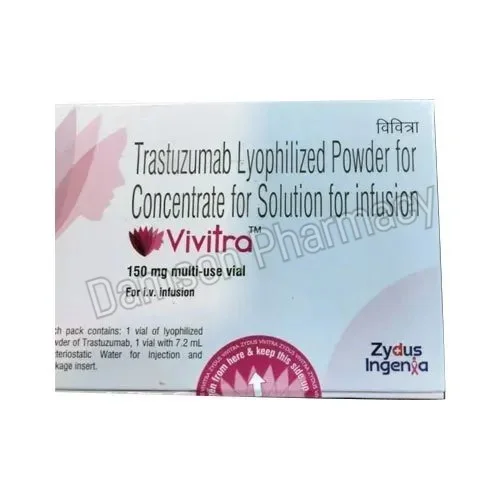
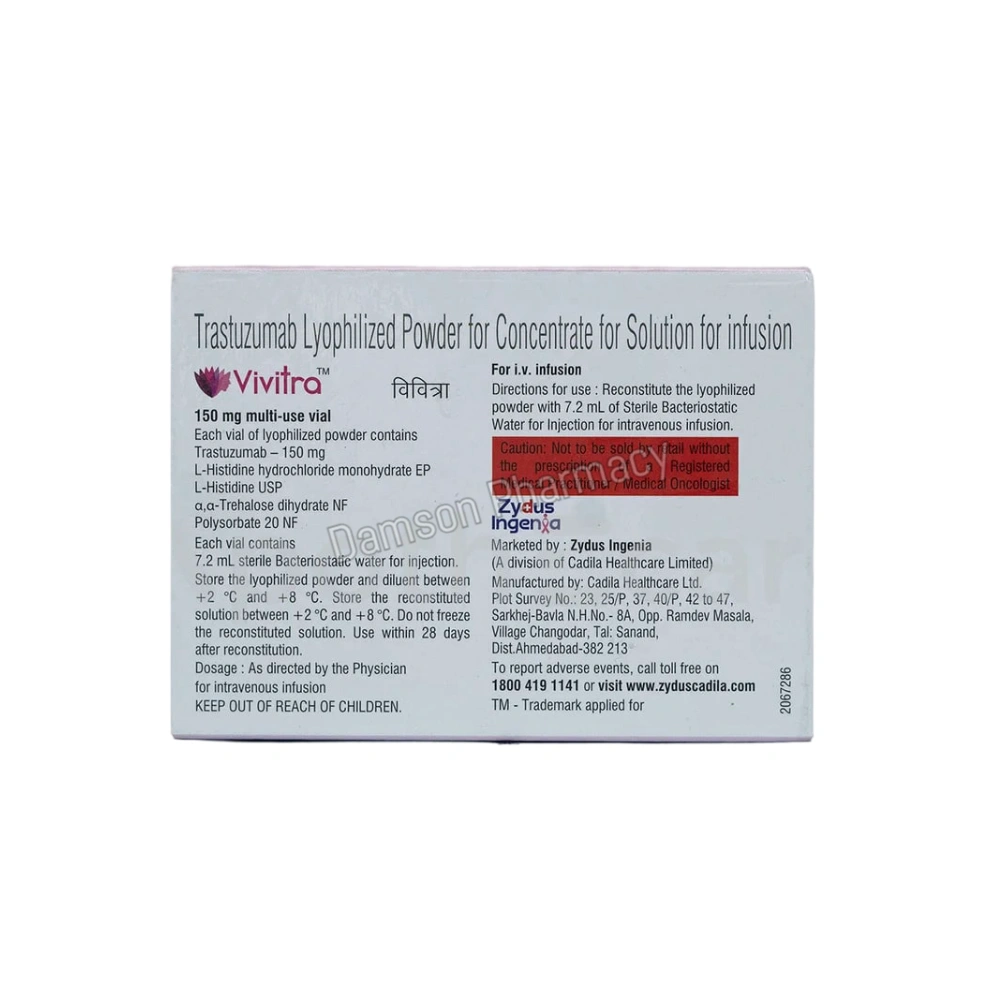
Vivitra 150 mg Injection
Price range: $370.00 through $1,750.00
Vivitra 150 is used to treat HER2-positive breast and gastric cancers. It contains Trastuzumab, which works by targeting the HER2 protein on cancer cells, helping slow their growth and supporting the immune system in destroying them.
| Pack Size | Price/Unit | Price | Quantity | |
|---|---|---|---|---|
| 1 Injection | $370.00/unit | $370.00 | ||
| 3 Injections | $360.00/unit | $1,080.00 | ||
| 5 Injections | $350.00/unit | $1,750.00 |
Looking for bulk / B2B pricing? |
Send Inquiry |
Availability : IN STOCK




Introduction to Vivitra 150 mg Injection
Vivitra 150 mg Injection is used in the treatment of breast and stomach Cancer. It works by killing the cancer cells by inhibiting HER2 (human epidermal growth factor receptor protein). In HER2-positive patients, breast cancer cells have high levels of HER2 proteins, which can promote the rapid growth of tumors by acting as signals to cancer cells.
This medication is also used to treat metastatic gastric cancer with increased levels of HER2 proteins. HER2-positive breast cancers are more aggressive in nature. The targeted therapy for HER2-positive breast cancer works by selectively targeting the proteins responsible for the growth, development, and spread of cancer.
Use effective birth control during the treatment and for at least 7 months after the final dose. Vivitra 150 mg Injection is not recommended for patients aged under 18, patients who have severe breathing problems or need oxygen treatment.
Uses of Vivitra 150 mg
Vivitra 150 mg is a brand name for trastuzumab, a monoclonal antibody used primarily in the treatment of HER2-positive cancers. Here’s a summary of its uses:
- Breast Cancer
- Gastric (Stomach) Cancer
How Does Vivitra 150 mg Work?
Vivitra 150 mg Injection is a recombinant IgG1 monoclonal antibody. It works against HER2 (human epidermal growth factor receptor 2) receptors, which are responsible for the overproliferation of cancer cells in breast and stomach cancers It destroys the cancer cells by inhibiting HER2. It also inhibits various cancer-causing downstream signaling pathways.
Strengths and Variants
Side Effects of Vivitra
Common Side Effects
- Fever and Chills
- Nausea and Vomiting
- Fatigue (Tiredness)
- Diarrhea
- Headache
- Rash or Skin Reactions
- Cough or Respiratory Symptoms
- Muscle or Joint Pain
Serious Side Effects
- Severe Allergic Reactions
- Severe Infections
- Liver Toxicity
- Gastrointestinal Issues
Drug Interactions
- Anthracyclines
- Other Chemotherapy Drugs
- Radiation Therapy
- Immunosuppressants or Biologics
- Live Vaccines
- Heart Medications
Warnings & Precautions
1. Cardiotoxicity (Heart Damage)
- Risk of heart failure, especially with prior anthracycline use (like doxorubicin). Monitor left ventricular ejection fraction (LVEF) before and during treatment. Do not use in patients with significant heart dysfunction unless benefits outweigh risks.
2. Infusion-Related Reactions
- May cause fever, chills, nausea, hypotension, bronchospasm, or anaphylaxis. These reactions usually occur during the first infusion. Monitor closely and administer premedication if needed.
3. Pulmonary Toxicity
- Risk of interstitial lung disease, pneumonitis, or acute respiratory distress syndrome (ARDS). Discontinue immediately if serious lung symptoms develop.
4. Embryo-Fetal Toxicity
- Can cause birth defects or fetal harm. Women of childbearing potential should use effective contraception during treatment and for 7 months after the last dose.
5. Severe Neutropenia and Infections
- When used with chemotherapy, risk of serious infections increases due to bone marrow suppression.
6. Use in Pregnancy and Lactation
- Not recommended during pregnancy or breastfeeding.
7. Pre-existing Lung or Heart Disease
- Use with extreme caution in patients with known heart or lung conditions.
8. Close Supervision During Infusion
- Emergency equipment and medications (e.g., epinephrine, antihistamines) should be available during administration.
Safety Advice
- Report any breathing difficulties, chest pain, or swelling immediately.
- Avoid pregnancy during treatment; use contraception for 7 months after.
- Do not breastfeed during treatment and for 7 months post-treatment.
- Avoid live vaccines during treatment due to weakened immune system.
- Practice good hygiene and avoid exposure to infections or sick individuals.
- Consult doctor about all medications to avoid dangerous interactions.
Frequently Asked Questions
Can I breastfeed while on treatment with Vivitra 150 mg Injection?
How does Vivitra Injection work on my body?
Can Vivitra Injection cure cancer?
Can the use of Vivitra Injection cause hair loss?
| Pack Size | 1 Injection, 5 Injections |
|---|---|
| Price/Unit | $350/unit, $360/unit, $370/unit |
Related Products
Anti Cancer
Anti Cancer
Reviews
There are no reviews yet