
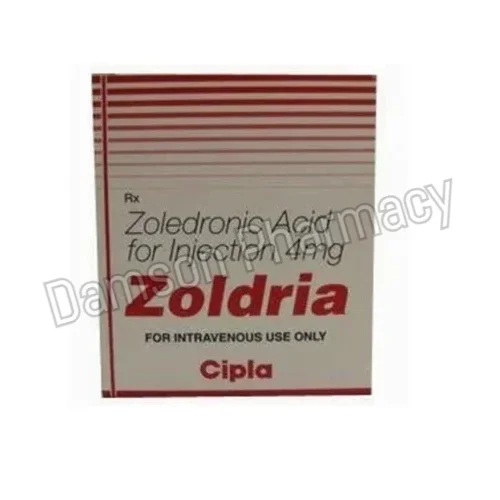
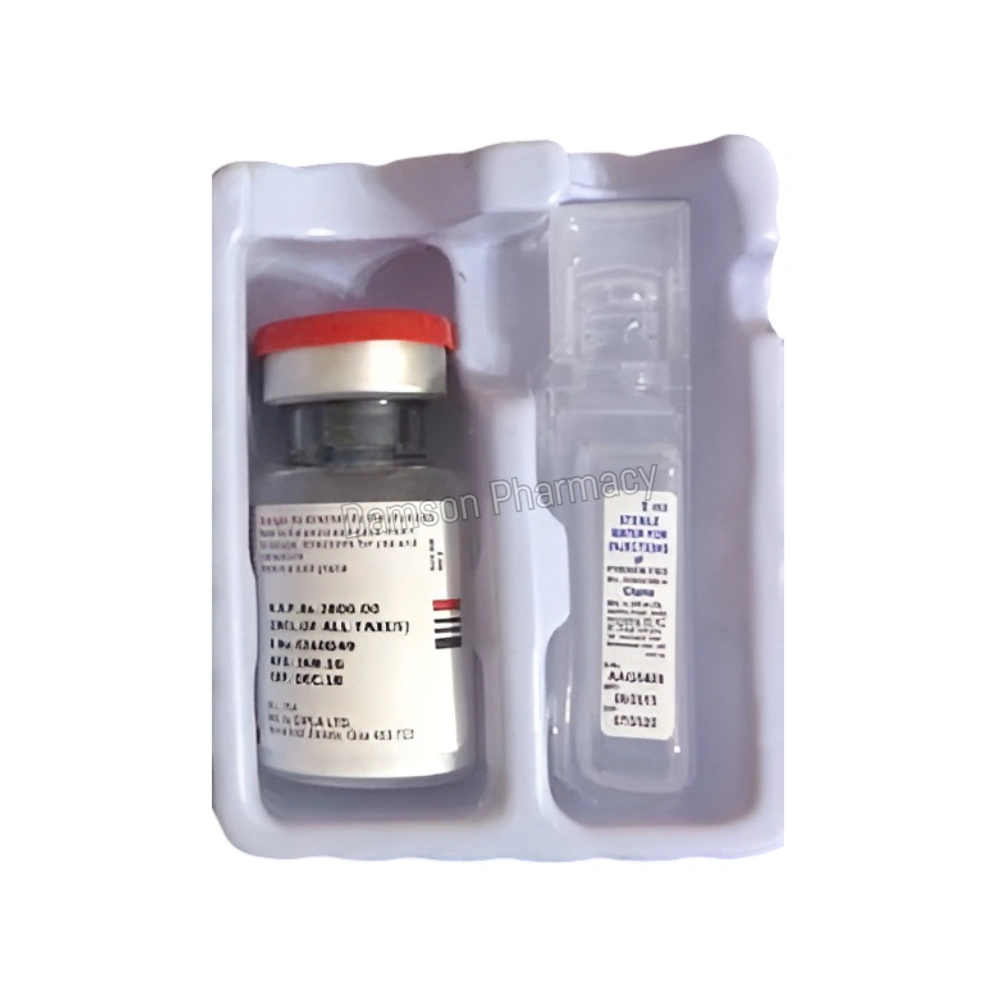
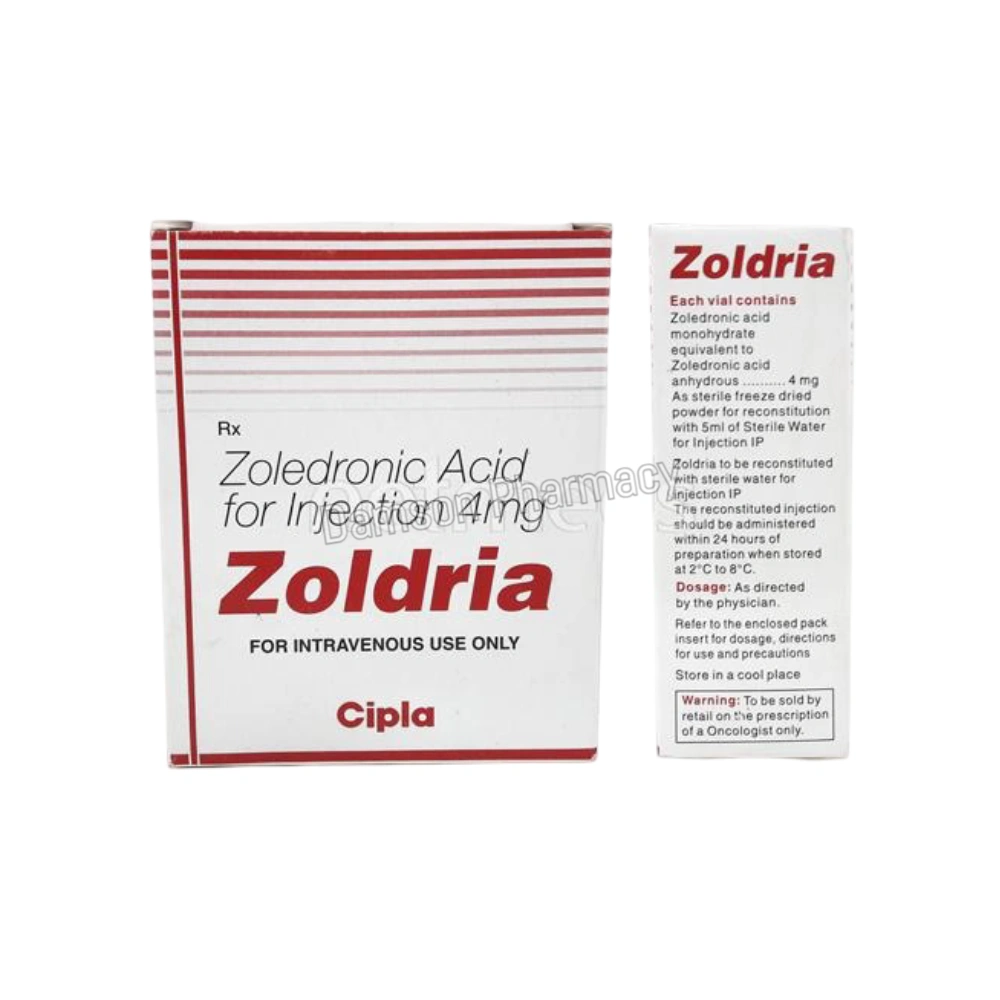
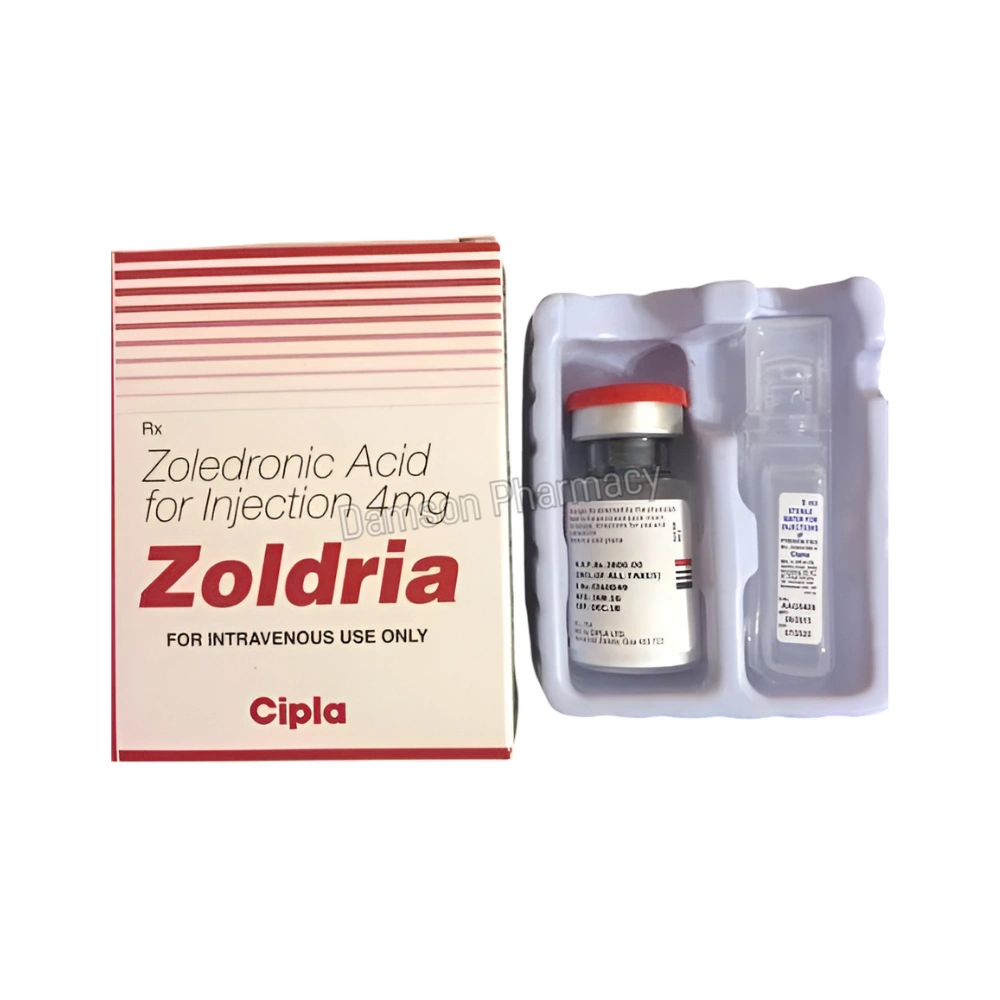
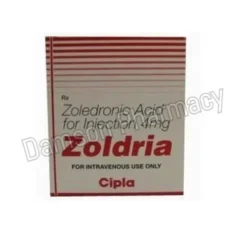
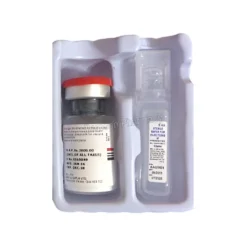
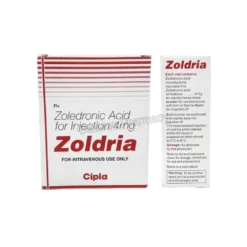
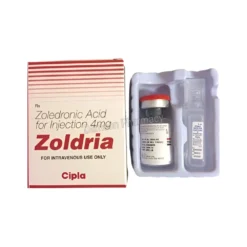
Zoldria 4 mg
Price range: $100.00 through $900.00
Zoldria 4 mg Injection contains zoledronic acid, a bisphosphonate that reduces osteoclast activity and bone resorption. It is used for certain bone disorders and malignancy-related hypercalcemia.
| Pack Size | Price/Unit | Price | Quantity | |
|---|---|---|---|---|
| 1 Injection | $100.00/unit | $100.00 | ||
| 5 Injections | $95.00/unit | $475.00 | ||
| 10 Injections | $90.00/unit | $900.00 |
Looking for bulk / B2B pricing? |
Send Inquiry |
Availability : IN STOCK




Introduction to Zoldria 4mg Injection
Zoldria 4 mg Injection belongs to bisphosphonate class, containing an active ingredient, Zoledronic Acid, also known as Zoledronate. It is used to treat the porosity or weakening of the bones (Osteoporosis) caused mainly after Menopause (postmenopausal Osteoporosis), also due to usage of steroids or other medicines, changes in hormone levels, inadequate diet intake, etc. Apart from that, Zoldria Injection can reduce the risk of breakdown of bones during cancer.
It is also used to treat raised levels of calcium in the blood in people who have cancer. This medicine is also used in the treatment of Paget’s disease in which disruption of the replacement of old bone cells with new bone cells occurs. Osteoporosis is a bone disease which occurs when the body loses too much bone (calcium) into the blood, makes too little bone, or both. As a result, bones become porous, weak, less and fragile, indicating that they may get broken easily from a minor fall or slightest trauma.
Uses of Zoldria 4mg
Zoledronic acid is a bisphosphonate medication commonly used to treat various bone-related conditions. It’s available under different brand names, and “Zoldria” might be one of them. However, it’s important to note that medication names can vary by region, and I recommend confirming the specific name and formulation with a healthcare professional or your prescribing doctor.
- Osteoporosis
- Hypercalcemia
- Bone Metastases
- Hypercalcemia of Malignancy
- Prevention of Bone Loss
- Adjuvant Treatment for Early Breast Cancer
How Does Zoldria 4 mg Injection Work?
Zoldria 4 mg Injection has an active ingredient, Zoledronic Acid, which is a bisphosphonate. This medicine acts by suppressing the activity of osteoclasts, the cells present in the bone itself and responsible for desorption of calcium from bones which destroy bone only. This injection, however, strengthens the bones & minimizes the risk of fractures.
- Inhibition of Osteoclast Activity
- Binding to Bone Mineral
- Inhibition of Bone Resorption
- Promotion of Bone Formation
- Reduction of Fracture Risk
- Duration of Action
Side Effects of Zoldria 4 mg Injection
Common Side Effects
- Headache
- Back pain
- Musculoskeletal (bone, muscle or joint) pain
- Diarrhea
- Breathlessness
- Fatigue
- Constipation
- Fever
- Anemia (low number of red blood cells)
Serious Side Effects
- Hypersensitivity reactions
- Redness or swelling of the eyes
- Abdominal and stomach pain
- Nausea and vomiting
- Heartburn
Dosage of Zoldria 4mg
Zoldria 4mg Injection is typically administered as a slow intravenous infusion over at least 15 minutes, depending on the patient’s condition. For the treatment of bone-related complications in cancer, the usual dosage is 4mg every 3 to 4 weeks, along with calcium and vitamin D supplements to maintain bone health.
In patients with hypercalcemia of malignancy, a single dose of 4mg is often prescribed. The dosage may need adjustment in individuals with kidney impairment, and regular monitoring of kidney function and blood calcium levels is recommended. Always follow your doctor’s instructions regarding dosage and frequency.
How To Manage Side Effects?
- Open Communication
- Preventive Measures
- Pain Management
- Supplemental Calcium and Vitamin D
- Monitoring
- Medication Review
- Lifestyle Modifications
- Proactive Dental Care
- Regular Check-Ups
- Emergency Information
Warning & Precautions
- Administer under medical supervision only.
- Avoid if you have severe kidney disease.
- Ensure adequate hydration before the injection.
- Not recommended during pregnancy or breastfeeding.
- Take calcium and vitamin D supplements as advised.
- Risk of jawbone problems (osteonecrosis); get a dental checkup.
- Caution in heart patients due to risk of fluid retention.
- Report symptoms like muscle spasms, numbness, or severe pain.
- Avoid driving if you feel dizzy after the injection.
Frequently Asked Questions
How long should I receive Zoldria?
What lifestyle changes should I follow while receiving Zoldria?
Can Zoldria cause constipation?
| Pack Size | 1 Injection, 10 Injections, 5 Injections |
|---|---|
| Price/Unit | $100/unit, $90/unit, $95/unit |
Related Products
Menopause

Menopause
Menopause
Menopause
Menopause
Reviews
There are no reviews yet