
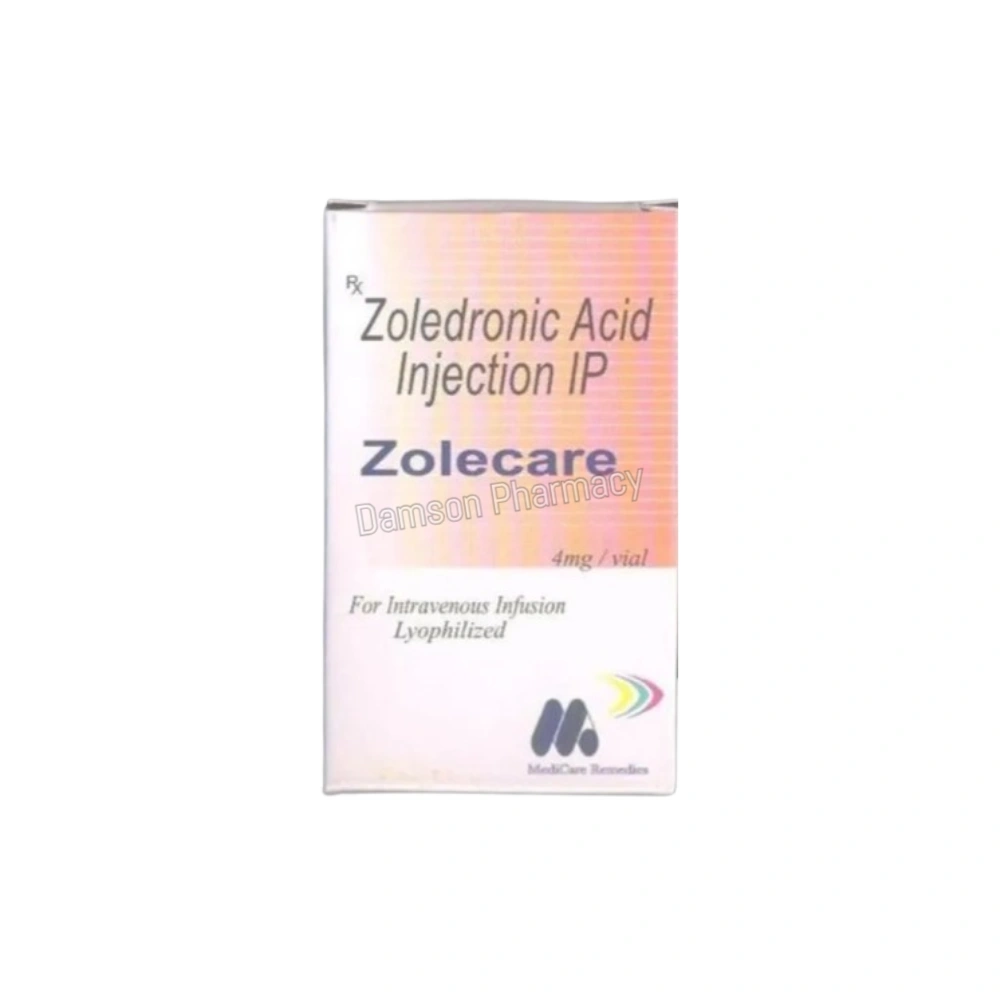

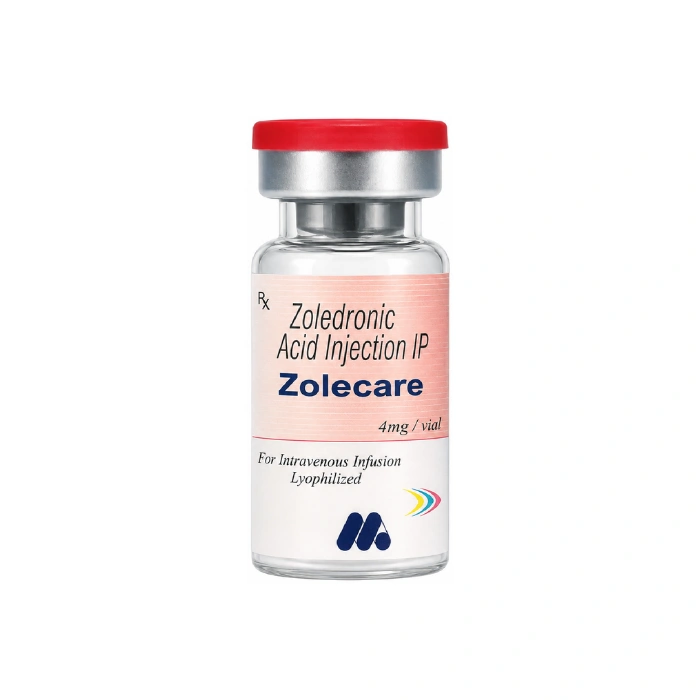
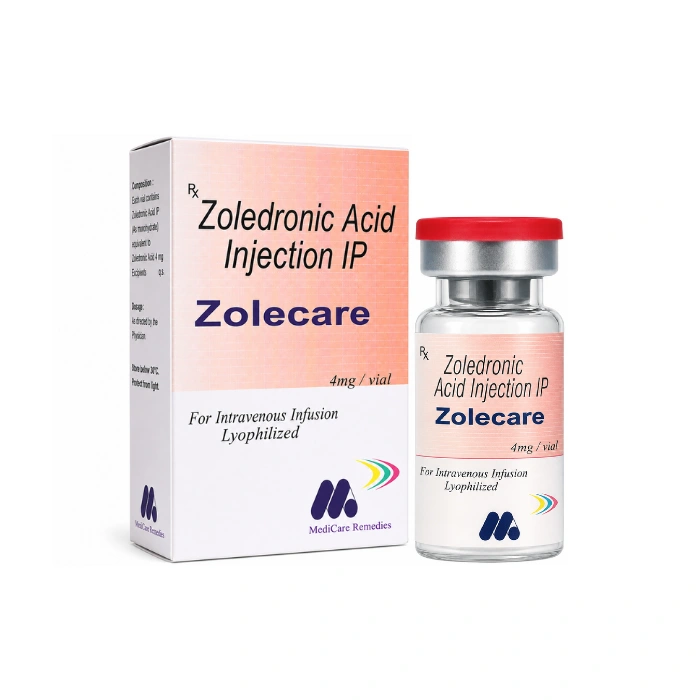
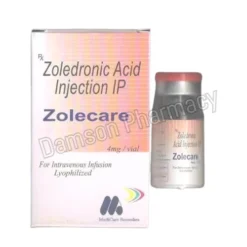
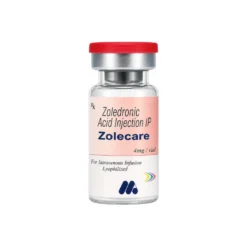
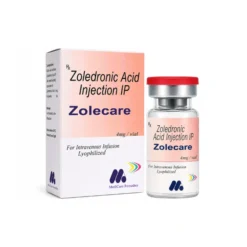
Zolecare 4 mg Injection
Price range: $90.00 through $800.00
Zolecare 4 mg Injection contains zoledronic acid, a bisphosphonate that limits osteoclast activity and bone breakdown. It is used for certain bone disorders and hypercalcemia.
| Pack Size | Price/Unit | Price | Quantity | |
|---|---|---|---|---|
| 1 Injection | $90.00/unit | $90.00 | ||
| 5 Injections | $85.00/unit | $425.00 | ||
| 10 Injections | $80.00/unit | $800.00 |
Looking for bulk / B2B pricing? |
Send Inquiry |
Availability : IN STOCK




Introduction to Zolecare 4 mg Injection
Zolecare 4 mg Injection 1’s belongs to the class of medicines called ‘bisphosphonates’ used to treat osteoporosis (weak and brittle bones) caused by Menopause or long-term steroid use. Zolecare 4 mg Injection 1’s also treats Paget’s bone and high calcium levels caused by cancer.
Osteoporosis is a bone disease that weakens and thins bones by decreasing bone density, common in post-menopausal women. As the density of bones decreases, they weaken and are more likely to break.
Zolecare 4 mg Injection 1’s contains Zoledronic acid that works by binding to the bone tightly and preventing the removal of calcium by osteoclasts (a type of bone cell that destroys bone tissue).
This prevents osteoclasts from breaking down the bone and keeps the bones strong and minimizes the risk of bones breaking. It is manufactured by Medicare Remedies Pvt Ltd. A doctor or healthcare professional will administer Zolecare 4 mg Injection 1’s.
Uses of Zolecare 4mg
Here are some uses of Zolecare 4mg Injection:
- Postmenopausal Osteoporosis
- Hypercalcemia
- Paget’s disease
How Does Zolecare 4 mg Work?
Zolecare 4 mg Injection has an active ingredient, Zoledronic Acid, which is a bisphosphonate. This medicine acts by suppressing the activity of osteoclasts, the cells present in the bone itself and responsible for desorption of calcium from bones which destroy bone only. This injection, however, strengthens the bones & minimizes the risk of fractures.
Side Effects Zolecare
Common Side Effects
- Headache
- Back pain
- Heartburn
- Diarrhea
- Nausea
- Fatigue
- Constipation
Serious Side Effects
- Kidney Problems
- Jawbone Issues (Osteonecrosis)
- Atypical Thigh Bone Fractures
- Severe Allergic Reactions
- Eye Problems
How to Manage Side Effects?
- Read the Medication Guide
- Follow Dosage Instructions
- Take with Food or Water
- Monitor Your Body
- Communicate with Your Doctor
- Don’t Stop Abruptly
Warning & Precautions
Zolecare 4 mg Injection contains zoledronic acid, a bisphosphonate used to treat conditions such as osteoporosis, Paget’s disease, and hypercalcemia associated with cancer. While effective, it’s essential to be aware of specific warnings and precautions to ensure safe administration.
1. Hypocalcemia (Low Blood Calcium):
- Zoledronic acid may lower calcium levels in the blood. Symptoms include muscle spasms, numbness, or tingling sensations. Ensure adequate intake of calcium and vitamin D supplements as directed by your healthcare provider.
2. Unusual Thigh Bone Fractures:
- Zoledronic acid may increase the risk of atypical fractures in the thigh bone. Report any new or unusual thigh, hip, or groin pain to your healthcare provider promptly.
3. Ocular Issues:
- Zoledronic acid may cause eye inflammation, leading to symptoms such as redness, pain, or vision changes. Report any eye discomfort to your healthcare provider.
4. Inform Your Doctor:
- Before starting treatment, disclose any history of kidney disease, low calcium levels, dental issues, or any other significant health conditions to your healthcare provider.
5. Stay Hydrated:
- Adequate hydration is essential before and after receiving zoledronic acid to reduce the risk of kidney complications. Follow your healthcare provider’s recommendations regarding fluid intake.
6. Routine Check-ups:
- Regular monitoring of kidney function, calcium levels, and overall health is crucial during treatment. Attend all scheduled appointments and promptly report any unusual symptoms to your healthcare provider.
Safety Advice
- Prescription Only
- Follow Instructions
- Keep Out of Reach
- Avoid Overdosing
- Medical Conditions
- Driving and Machinery
Frequently Asked Questions
What is Zolecare 4mg Injection? What is it used for?
How does Zolecare 4mg Injection work?
How long should I take Zolecare 4mg Injection?
How is Zolecare 4mg Injection administered?
| Pack Size | 1 Injection, 10 Injections, 5 Injections |
|---|---|
| Price/Unit | $80/unit, $85/unit, $90/unit |
Related Products
Menopause
Menopause
Menopause

Menopause
Menopause
Reviews
There are no reviews yet